
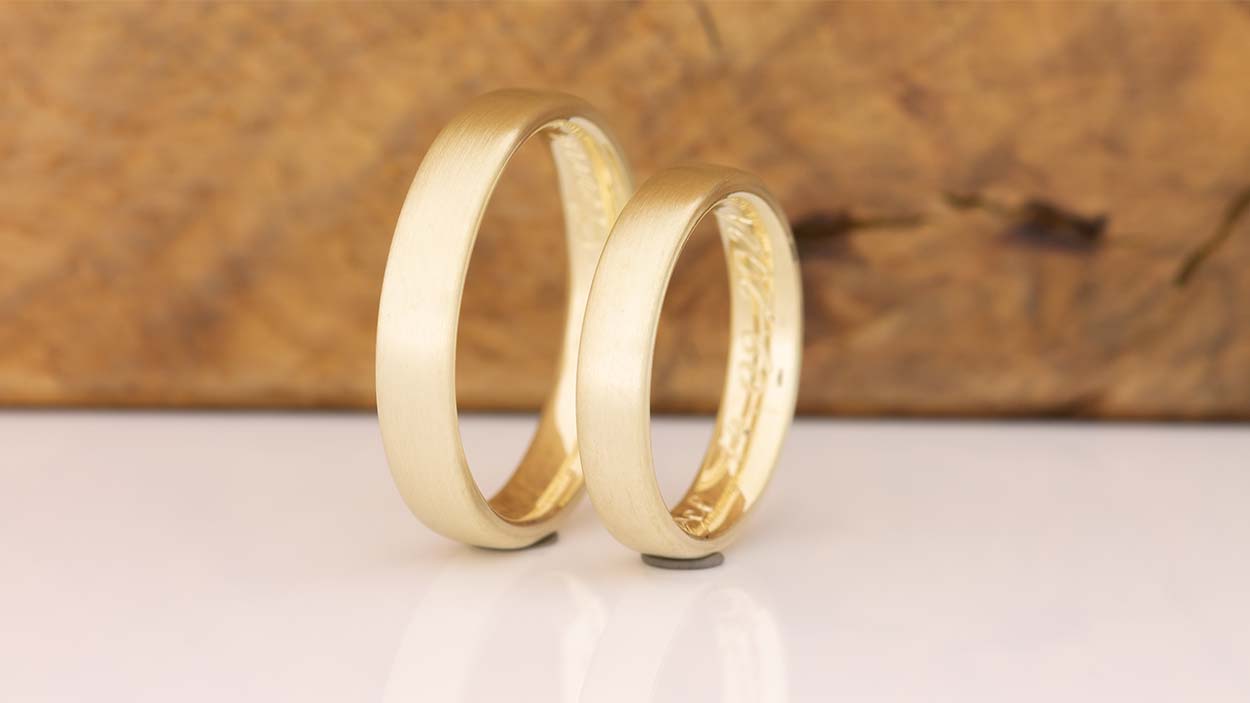
I received the complete photo documentation, removed the blank captions, corrected typos, and assigned an appropriate step to each photo section. I included the reference to the upcoming video in a neutral manner.
Forging Your Own Wedding Bands: A Couple from Wüstenrot Designs Their Own Wedding Rings
A couple from Wüstenrot decided not to simply pick out their own wedding rings, but to craft them together with their own hands. In this photo series, we follow the couple step by step through their day of forging in the workshop of master goldsmith Markus Wiesner.
From the initially straight pieces of precious metal to the careful shaping of the ring profile, the photos show how two personalized wedding rings gradually take shape from the raw material. The focus is not only on the craftsmanship but also on the shared experience during the wedding preparations.
For more information on the process, prices, and booking, visit the “Forge Your Own Wedding Rings” page.
The joint ring-forging day begins
It all starts with two straight pieces of precious metal and a vision of what the finished rings should look like. Under expert guidance, the couple from Wüstenrot begins the first steps of the process.
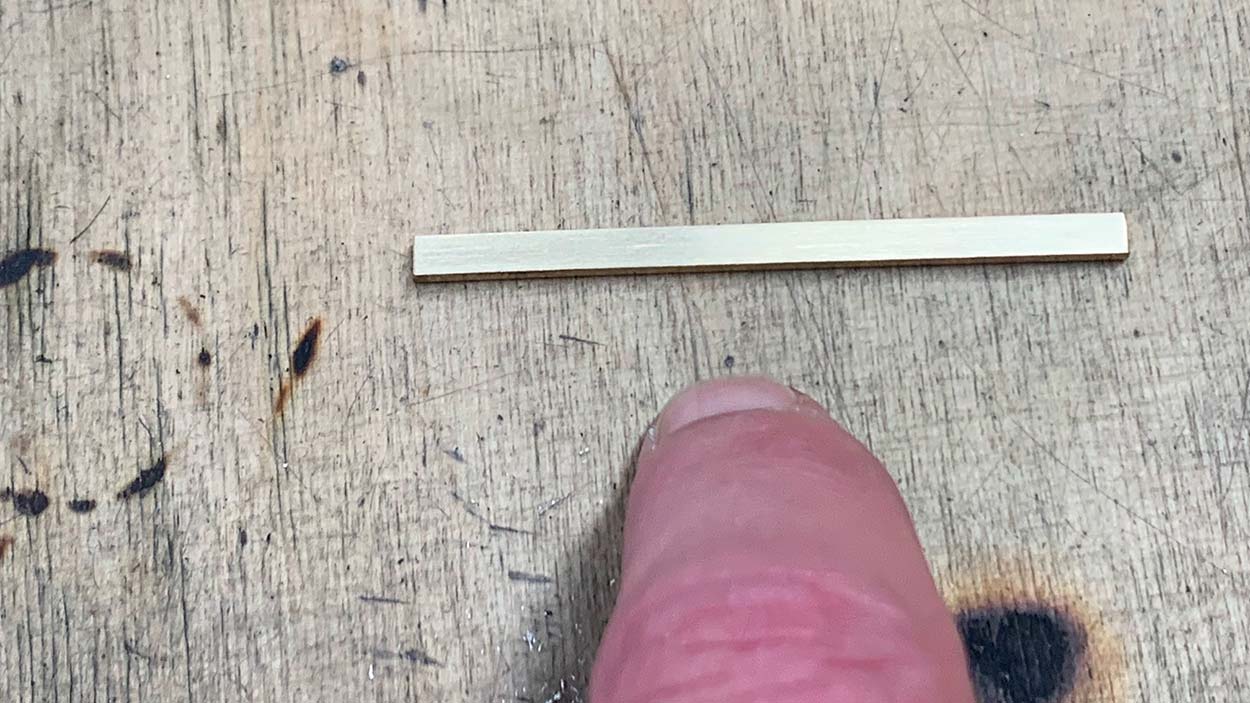
The first steps on the path to your self-forged wedding rings.
The straight piece of metal is transformed into a ring
With patience and concentration, the initially straight piece of precious metal is gradually bent. As this happens, the workpiece increasingly takes on its future ring shape.
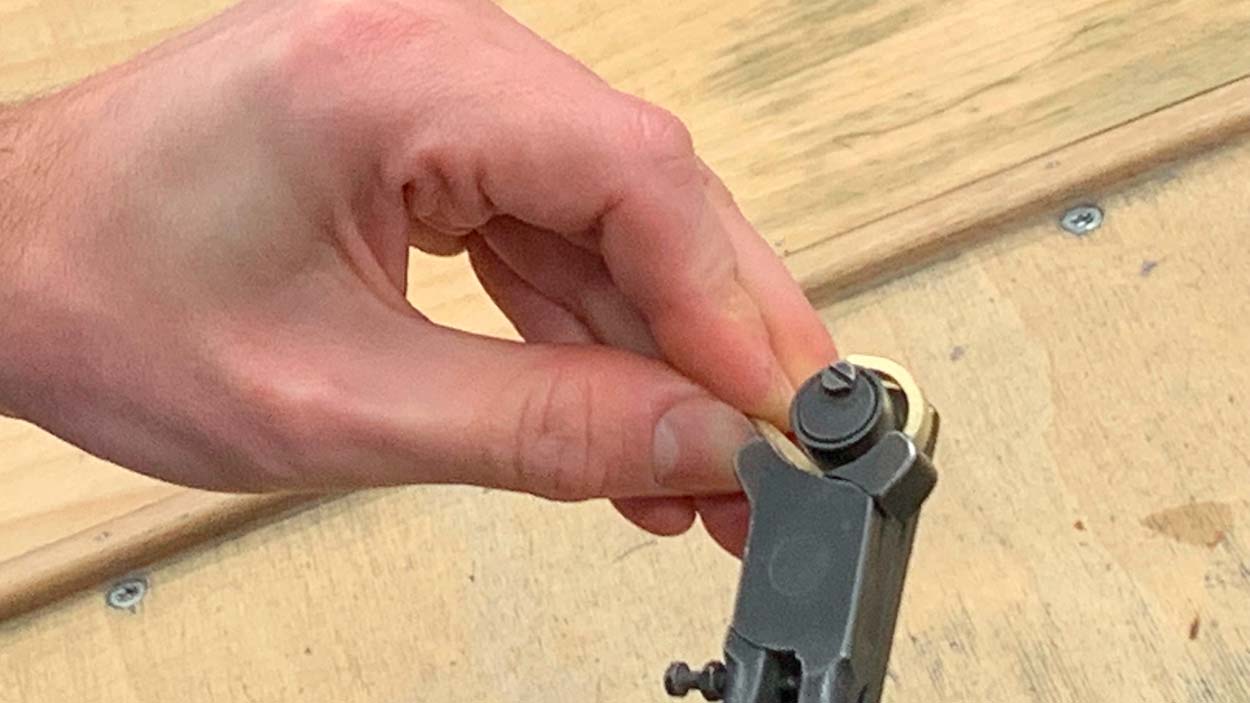
The straight starting material is carefully and evenly shaped.
The two ends of the ring meet
After the metal has been bent, the two ends come together. At this point, it’s already clear to see how the ring band will become a closed wedding ring.
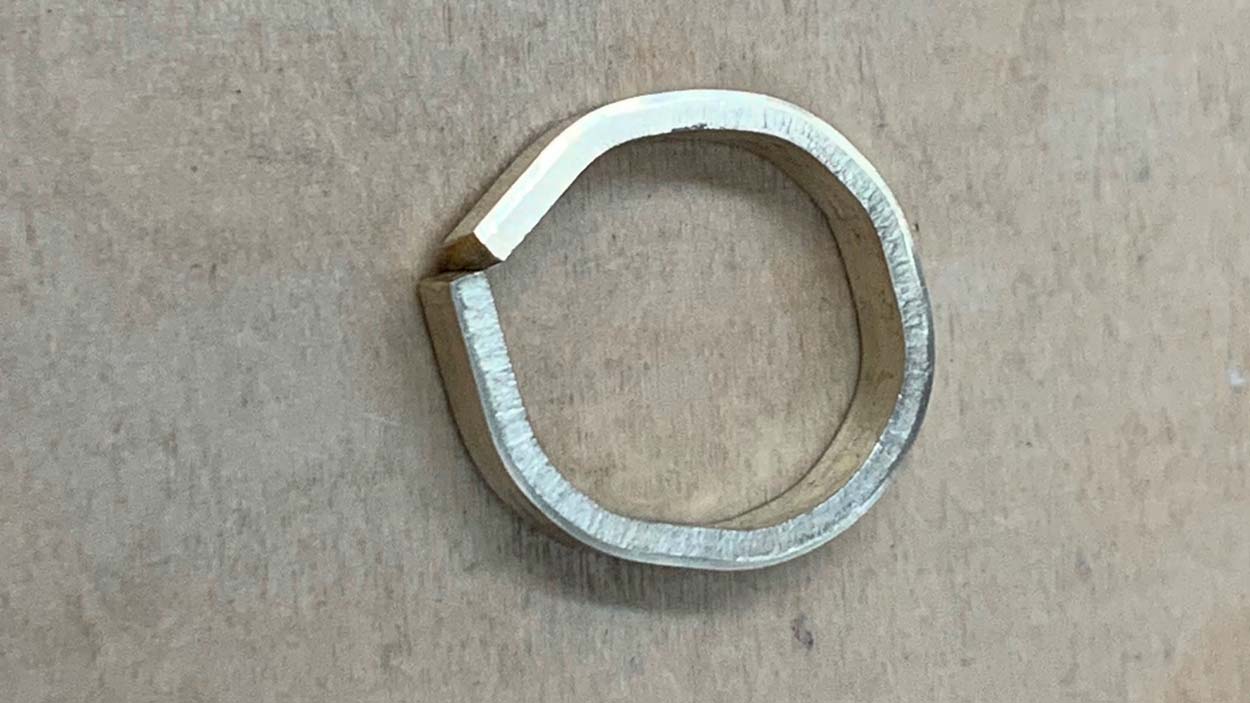
The ring band is almost closed, and its final shape is already visible.
The first ring shapes are visible
After bending, the workpieces already look like two wedding rings. However, numerous steps still lie ahead before the final result is achieved, during which the shape, surface, and comfort are further refined.
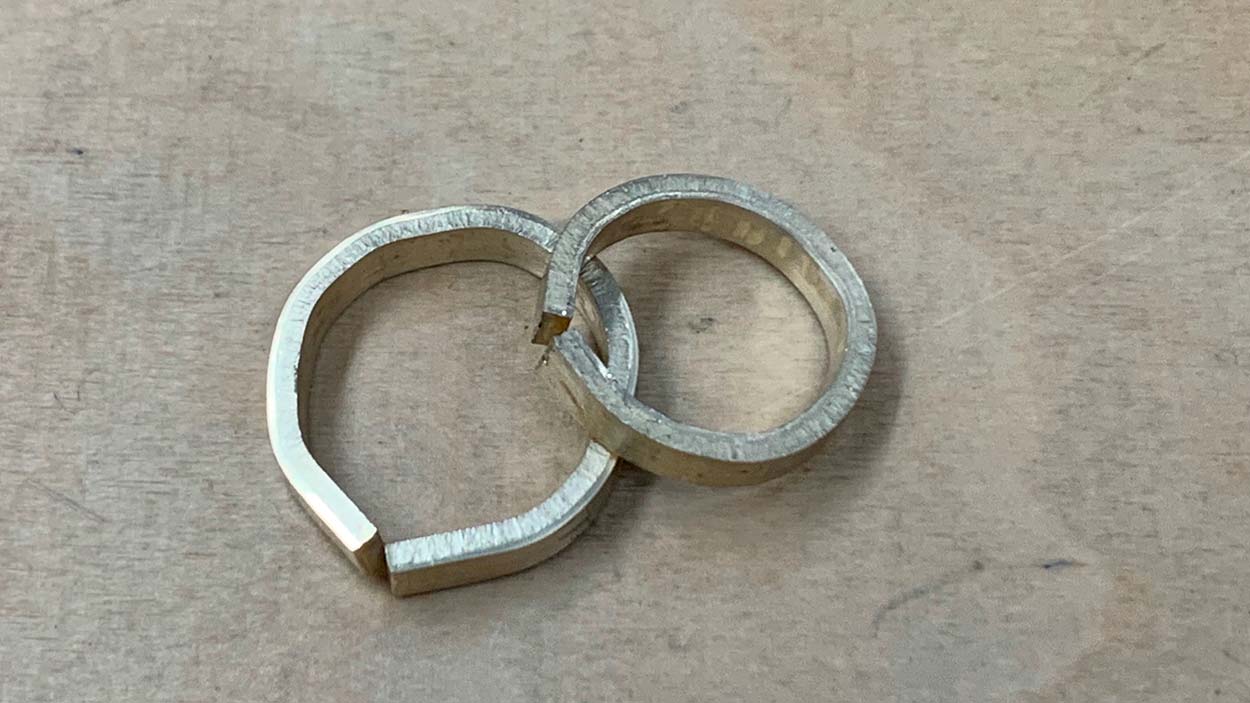
The two blanks already clearly show what the finished wedding rings will look like.
The wedding rings continue to take shape
Now the rings are carefully refined. Any unevenness is smoothed out, and the shape is gradually refined.
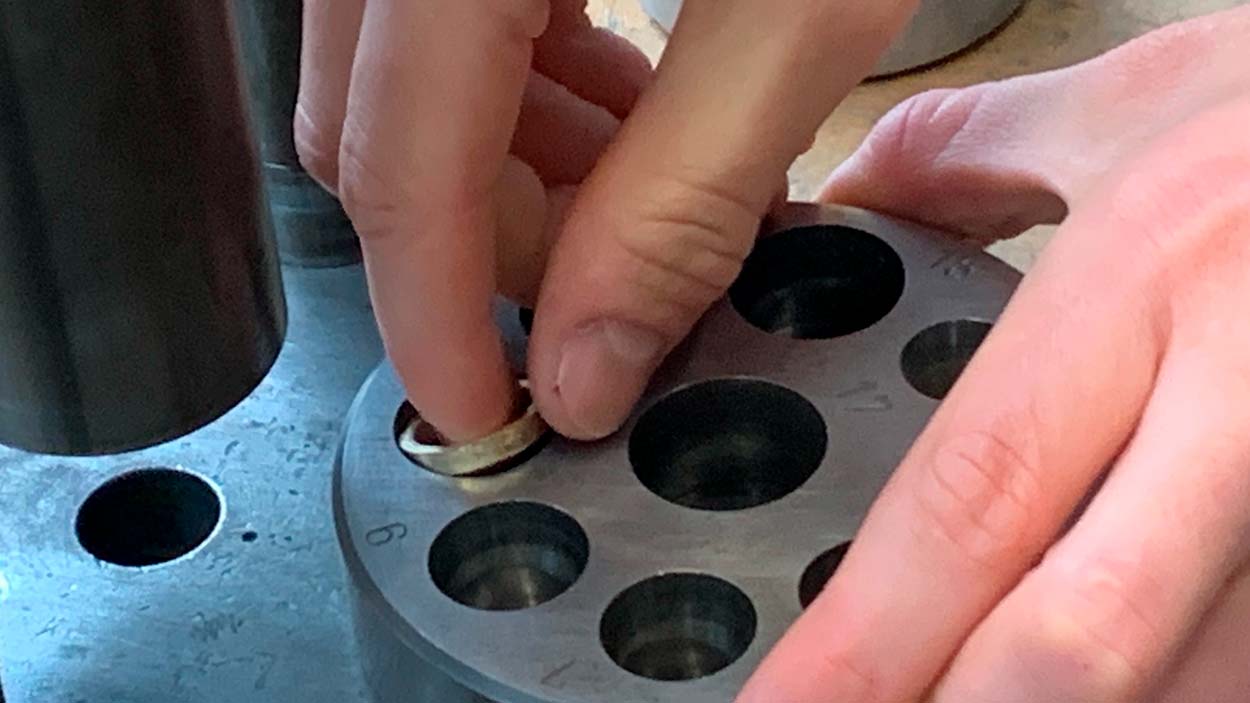
With each step, the rings become more uniform and precise.
The rings are rounded in the die press
In the die press, the rings are given a more uniform round shape. Through controlled pressure, the previously irregular shape is gradually refined.
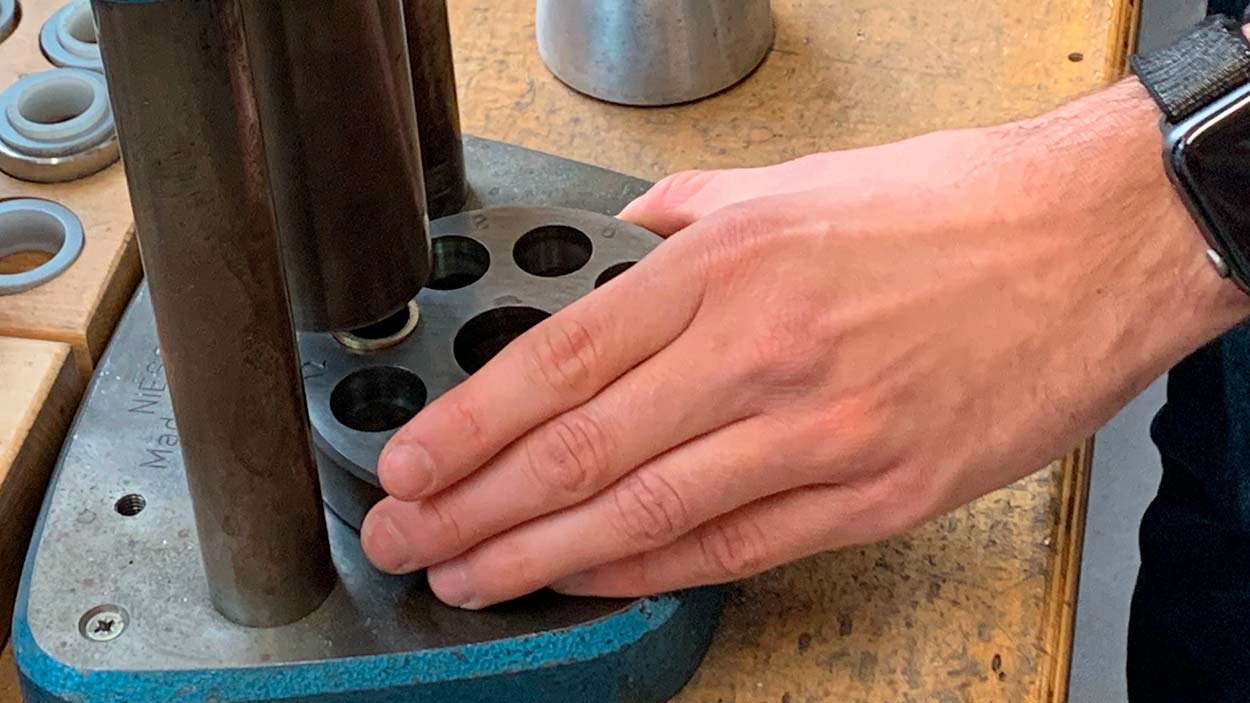
The die press is used to shape the rings in a controlled and uniform manner.
Step by step toward a uniform roundness
The rounding process does not take place in a single step. The ring is checked multiple times, repositioned, and carefully refined further.
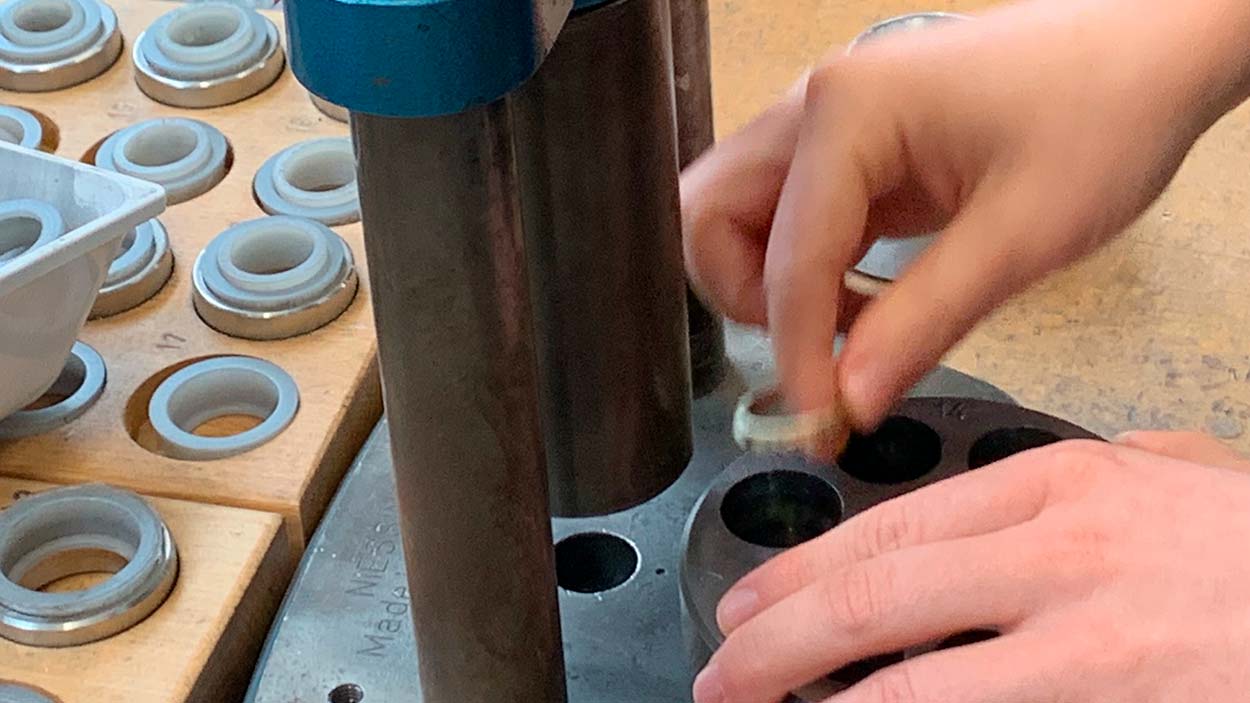
The ring’s shape becomes more uniform bit by bit.
The final ring shape takes form
With each additional pass, the rings come closer to their desired shape. Careful and consistent work is particularly important here.
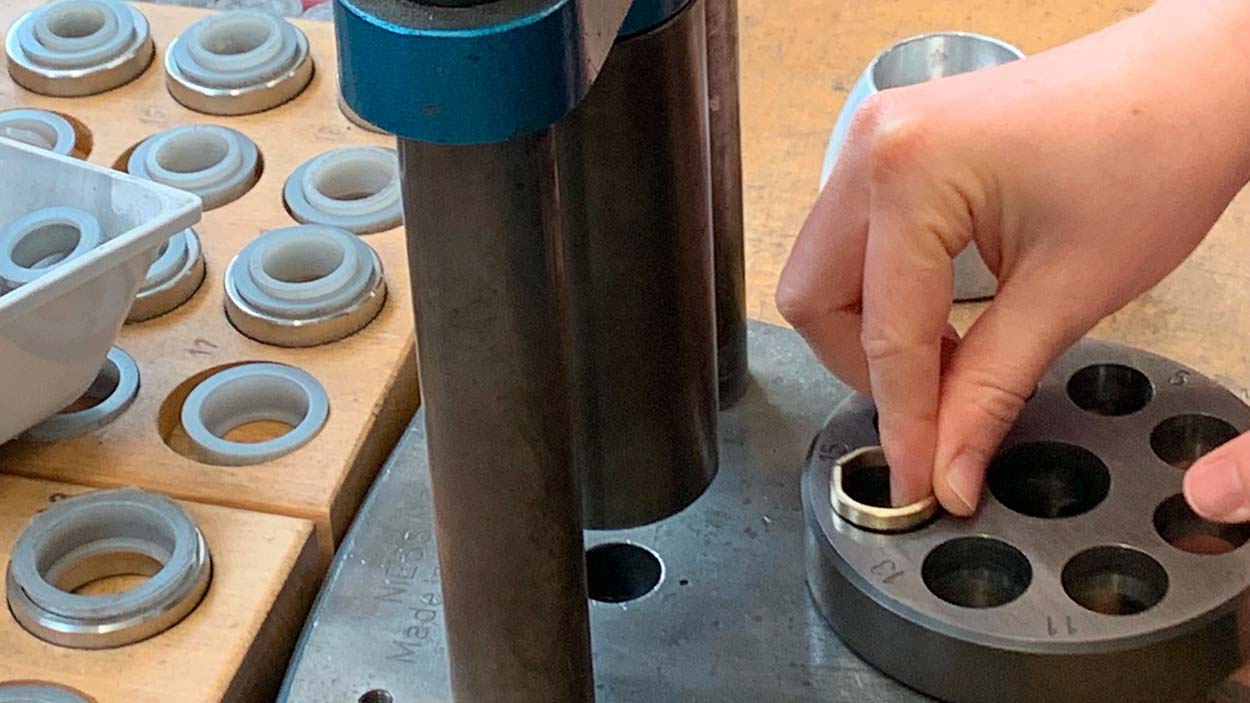
The basic shape of the wedding ring is now clearly defined.
Inspection and Further Processing
After rounding, the workpieces are checked repeatedly. This is the only way to ensure that the rings are uniformly shaped and that the next processing steps can be carried out properly.
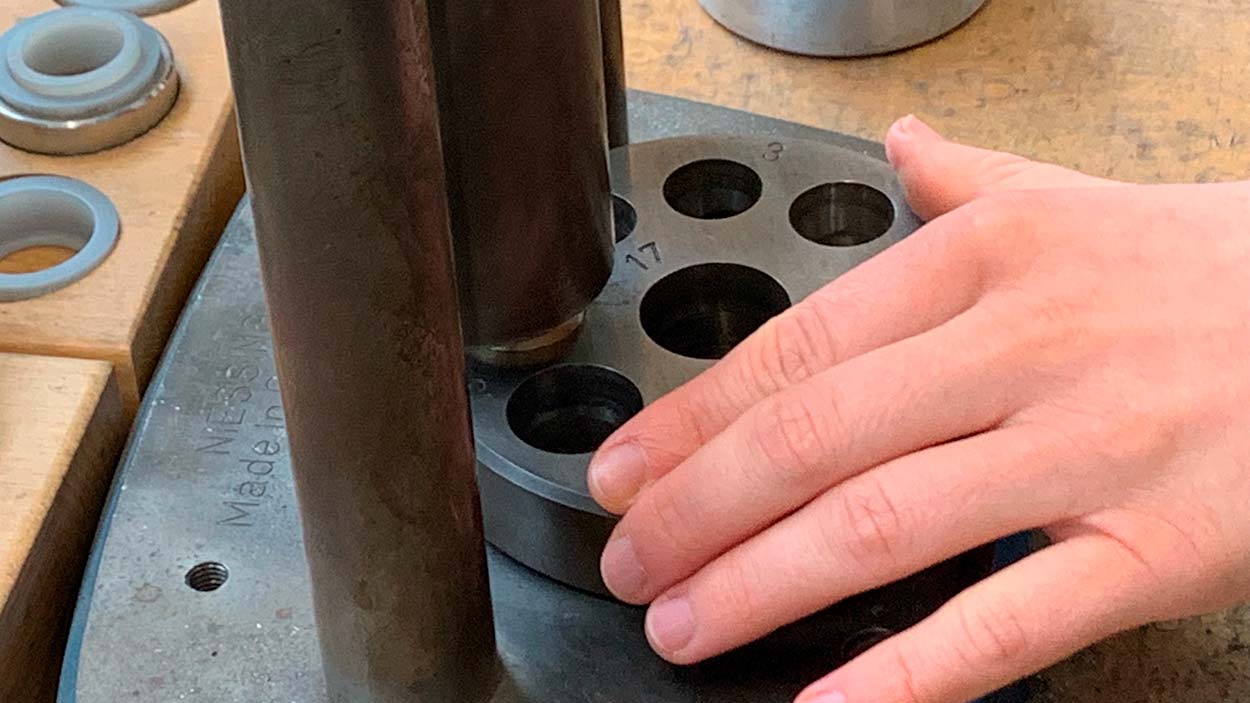
The shape is carefully checked between each step.
Handcrafting requires patience and precision
When crafting custom wedding rings, many small details matter. Every imperfection is checked and reworked as needed.
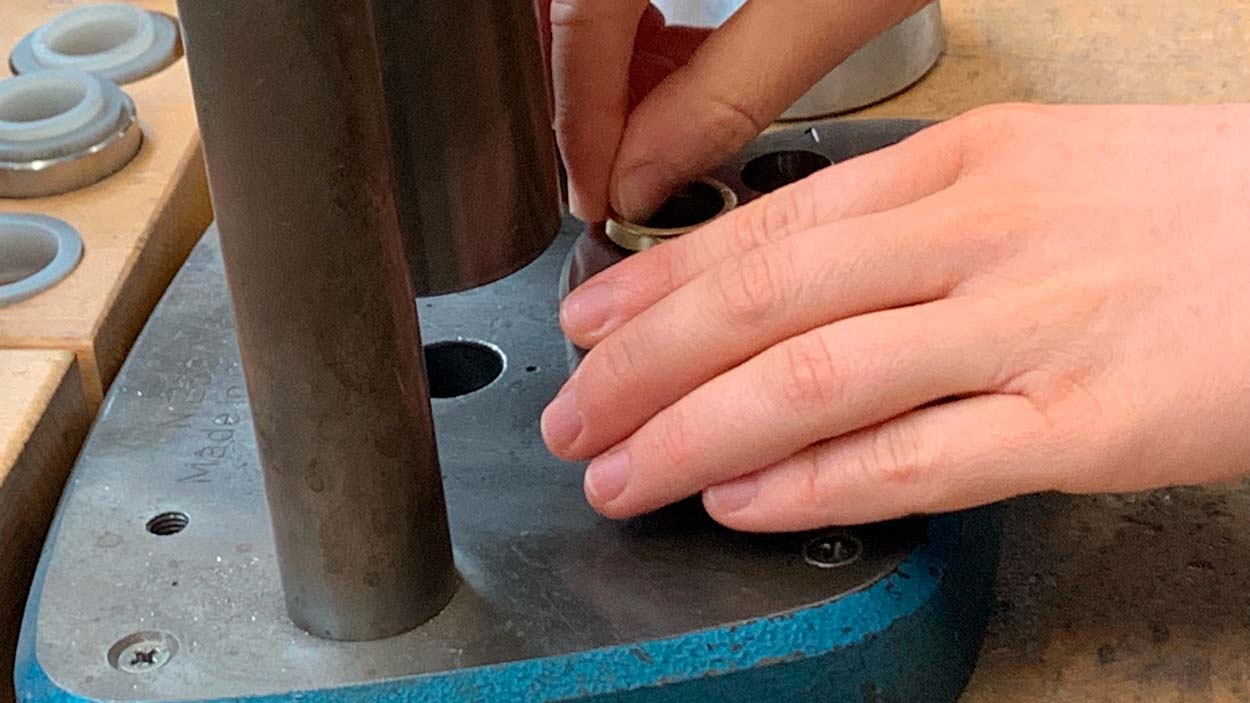
This meticulous craftsmanship lays the foundation for the rings’ final appearance.
Two rings with a shared history
During the forging session, two unique pieces of jewelry are created that visibly belong together. Each ring takes on its own character while remaining part of a pair.
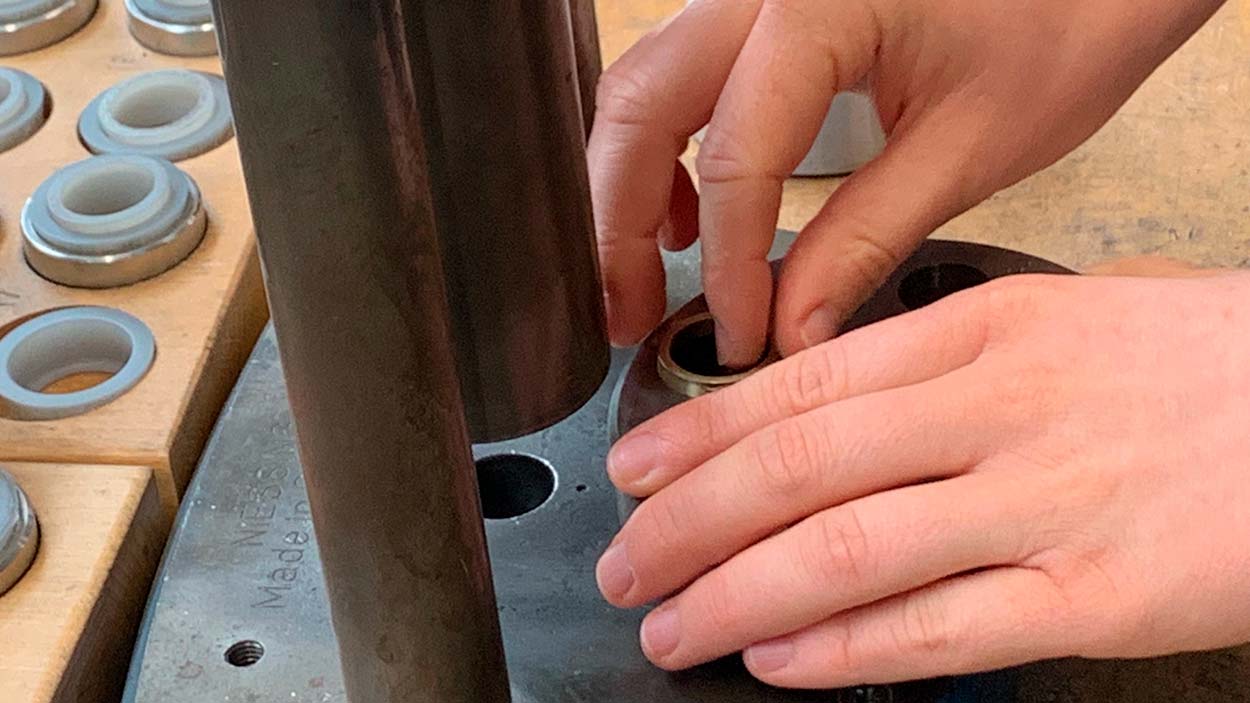
The two rings tell the story of the shared work and the special day in the workshop.
The ring profile determines shape and comfort
In the next stage of production, the profile of the rings is shaped. This process determines not only the outer design; the inner shape also plays an important role in ensuring that the rings are comfortable to wear later on.
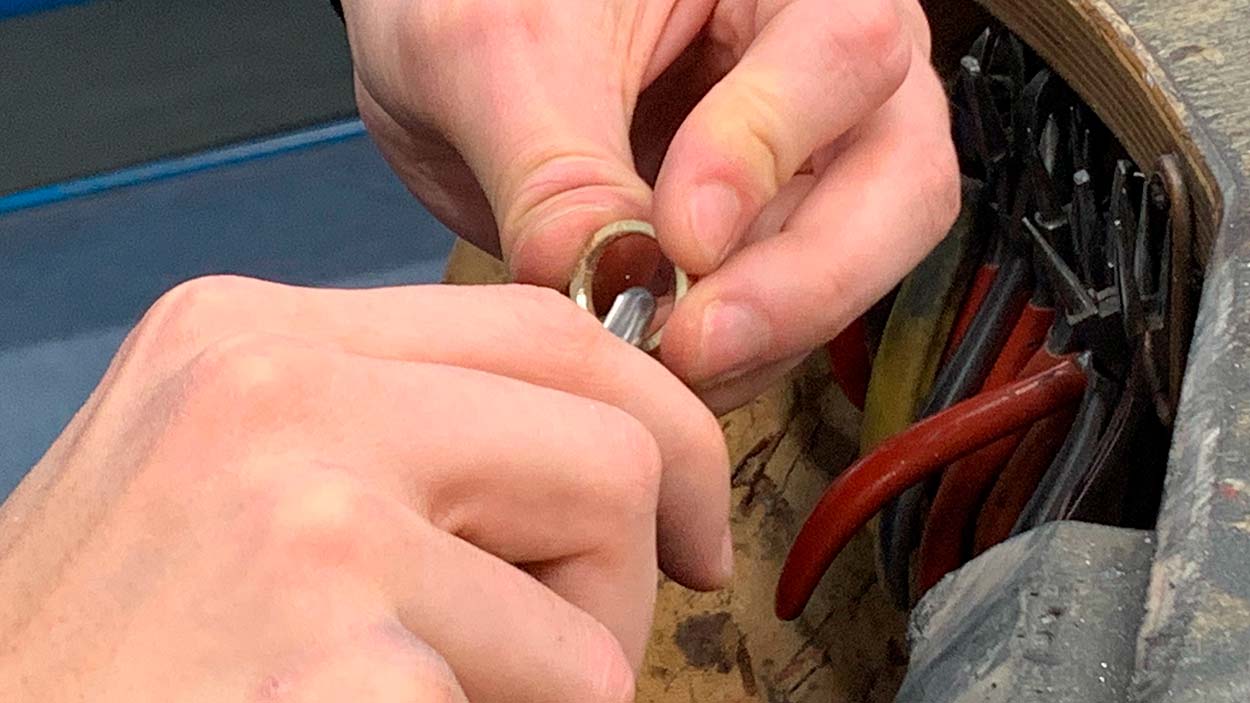
Shaping the profile gives the rings their characteristic form and ensures they are comfortable to wear.
The profile is carefully milled
Milling is one of the steps that requires particular precision. Material is removed in a controlled manner until the desired ring profile is achieved.
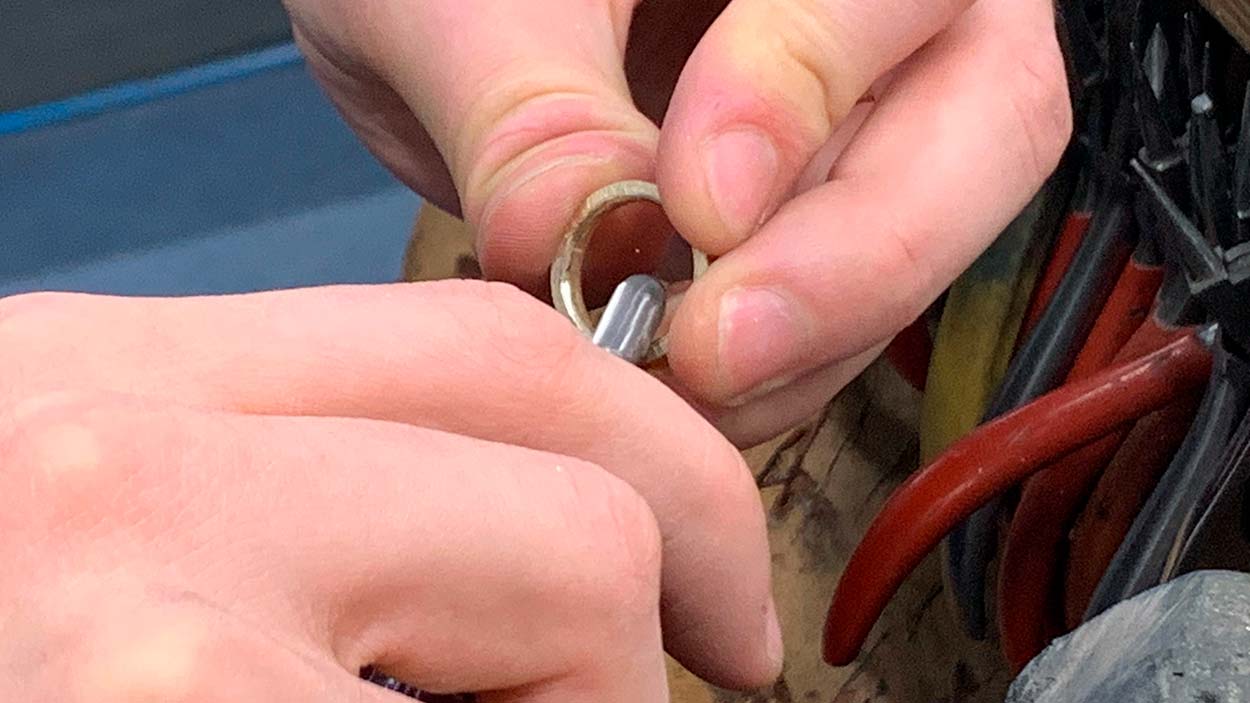
During milling, the desired shape is crafted with great patience and precision.
The final milling work on the ring
Even during the final milling steps, the ring is checked repeatedly. Minor adjustments ensure that the shape, proportions, and comfort correspond to the design agreed upon together.
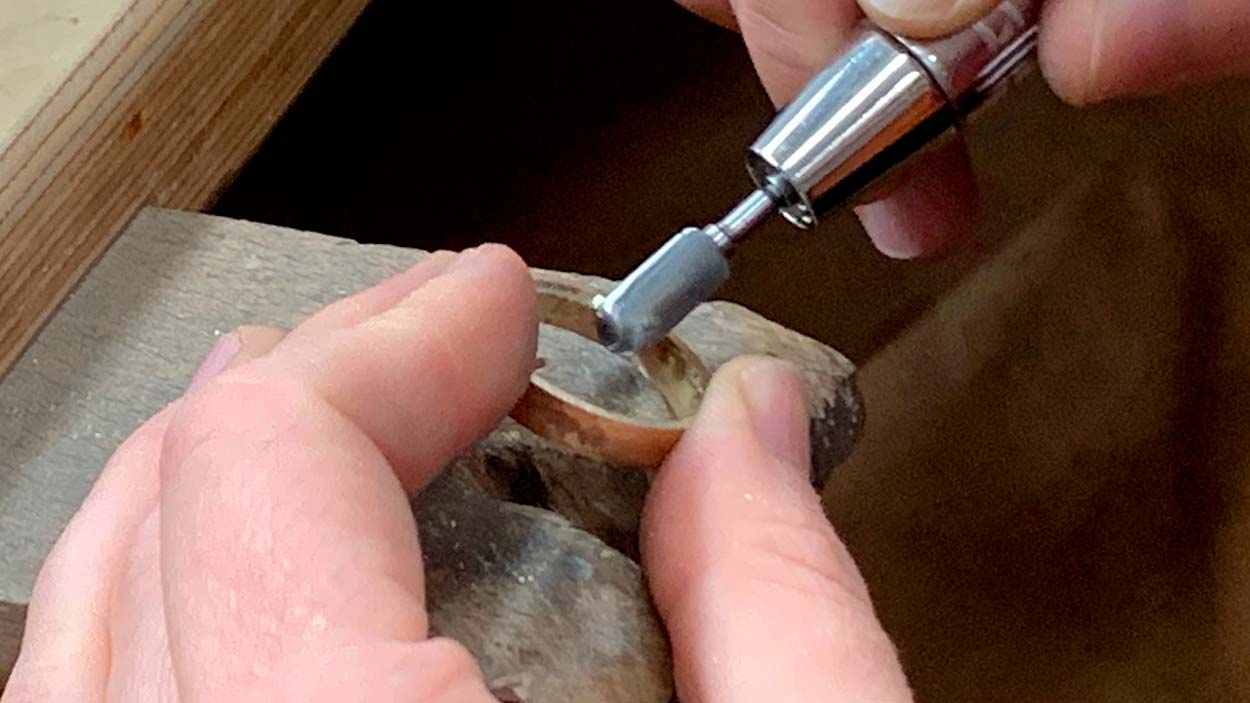
With the final milling steps, the wedding ring nears its final form.
Further steps are shown in the video documentation
After the steps shown here, there are still more stages on the way to the fully finished wedding rings. Depending on the desired design, these may include grinding, polishing, matting, or texturing the surface, as well as final finishing touches.
A supplementary video documenting the remaining steps is planned and will be included in this post at a later date.
A Special Day of Forging for the Couple from Wüstenrot
The photos show just how much work, attention, and personal dedication goes into hand-forged wedding rings. For the couple from Wüstenrot, this process resulted not only in two unique pieces of jewelry but also in memories of a day spent together in the goldsmith’s workshop.
Anyone who wants to forge their own wedding rings generally doesn’t need any prior craftsmanship experience. Master goldsmith Markus Wiesner guides you through the planning and production step by step and assists with all the challenging tasks.


