
Recycled Gold – How Old Gold Is Turned Into High-Quality Jewelry
First published on September 19, 2023 – comprehensively revised and technically updated on September 11,2026 · Illustrations used: AI-generated
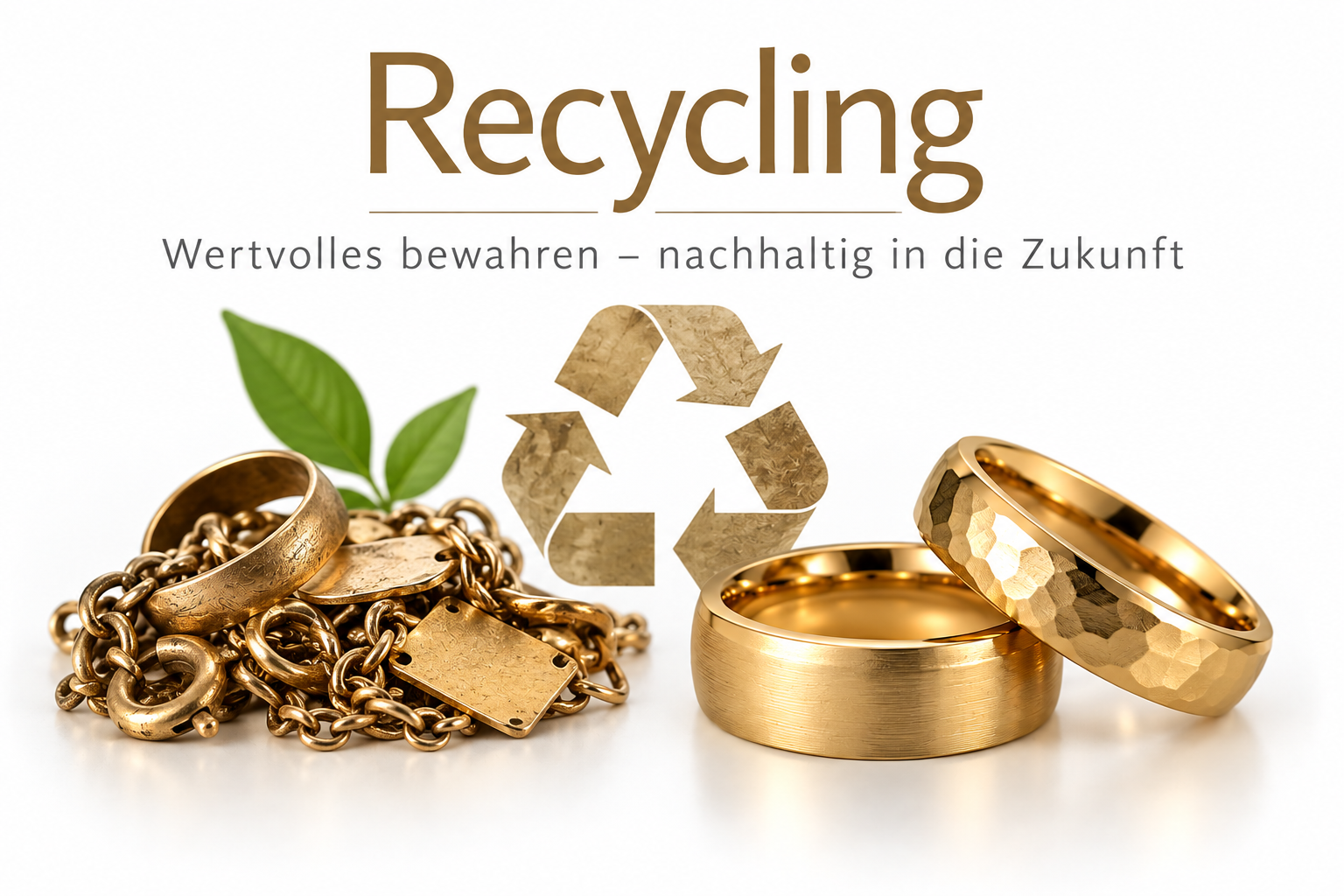
Gold is virtually predestined for recycling. An old ring, a necklace that’s no longer worn, or a gold coin does not lose its gold content simply because it has already served a previous purpose. The precious metal it contains can be recovered, refined, and reprocessed into a specific jewelry alloy.
At our goldsmith’s shop, we have been purchasing old jewelry, bars, and coins for many years and returning precious metals to the manufacturing process. For us, recycled gold is therefore not an abstract sustainability issue, but rather part of our practical approach to working with a valuable material.
It is important, however, to make a distinction: recycled gold is not automatically the same as heirloom gold. With recycled gold, the focus is on recovering the precious metal. With wedding rings made from heirloom gold or old gold, on the other hand, the emotional connection to a specific piece of jewelry and its history can be the deciding factor.
What is recycled gold?
Recycled gold refers to gold that has already been used in another form and subsequently re-enters the precious metal cycle.
This can include, for example:
- old or unworn gold jewelry,
- damaged jewelry,
- old wedding rings,
- gold coins and bars,
- production scraps from jewelry manufacturing.
What matters is not what form the gold previously took. What matters is the fine gold content and how the material is processed for reuse.
Is recycled gold of lower quality than newly mined gold?
No. The quality of gold is not determined by whether the metal was previously used as jewelry.
If scrap gold is properly refined, high-purity gold can be recovered from it. This gold possesses the same fundamental properties as gold from a primary source. A gold atom carries no information about whether it was previously part of a ring, a coin, or a gold bar.
Rather, the fine content, the alloy used, its composition, and professional craftsmanship are decisive for the final quality of the jewelry.
We explain in more detail what fine gold and designations such as 585 or 750 mean in our guide to gold and fine gold.
Old gold doesn’t simply become a new ring
When it comes to recycling gold, you shouldn’t imagine the process as simply melting down any old jewelry and immediately turning it into a new piece of jewelry.
Old jewelry can consist of a wide variety of gold alloys. In addition, it may contain solders, coatings, other metals, or components that are not suitable for the new application.
Therefore, if the goal is to produce a precisely defined material, the precious metal it contains must be appropriately processed or refined and then specifically realloyed.
What does refining mean?
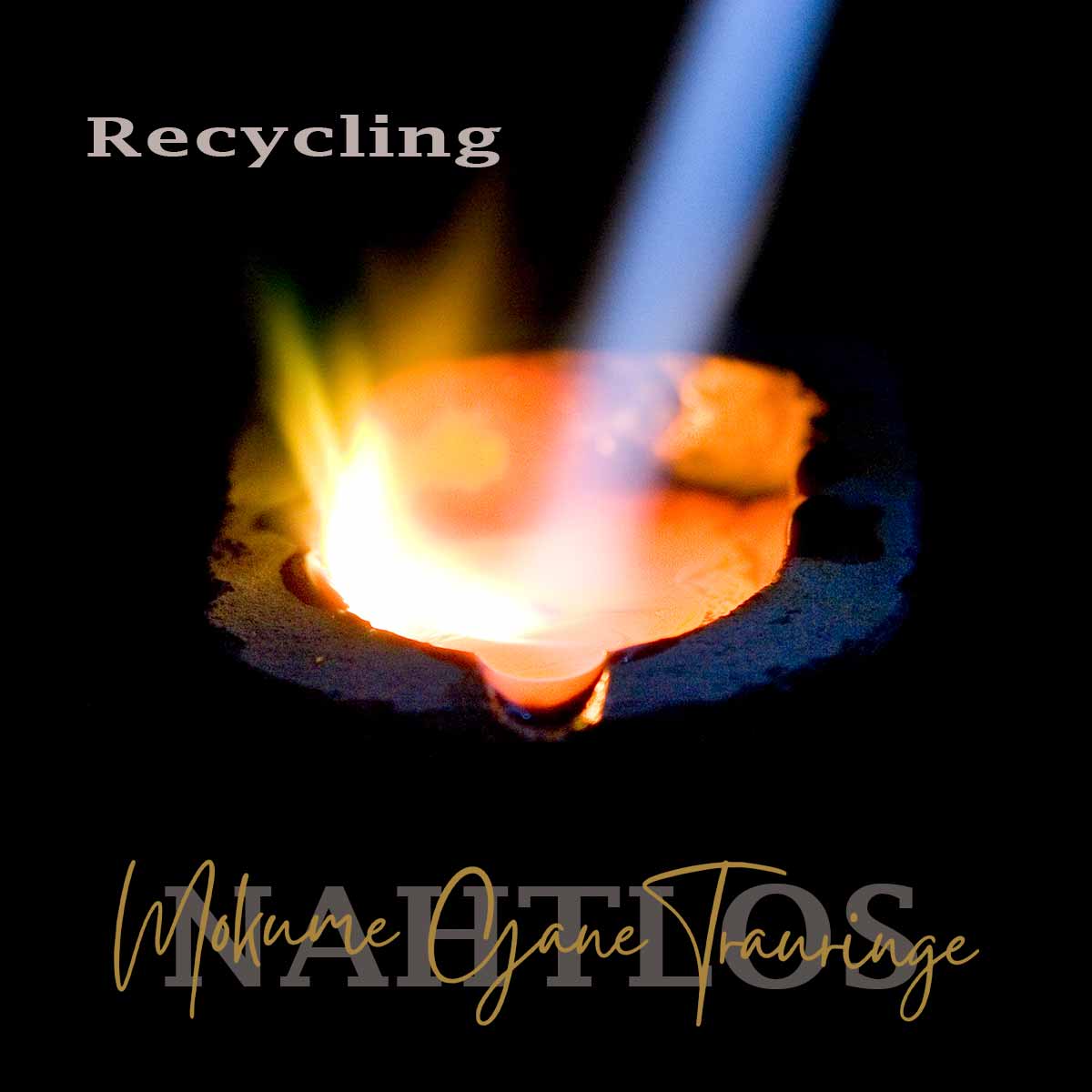
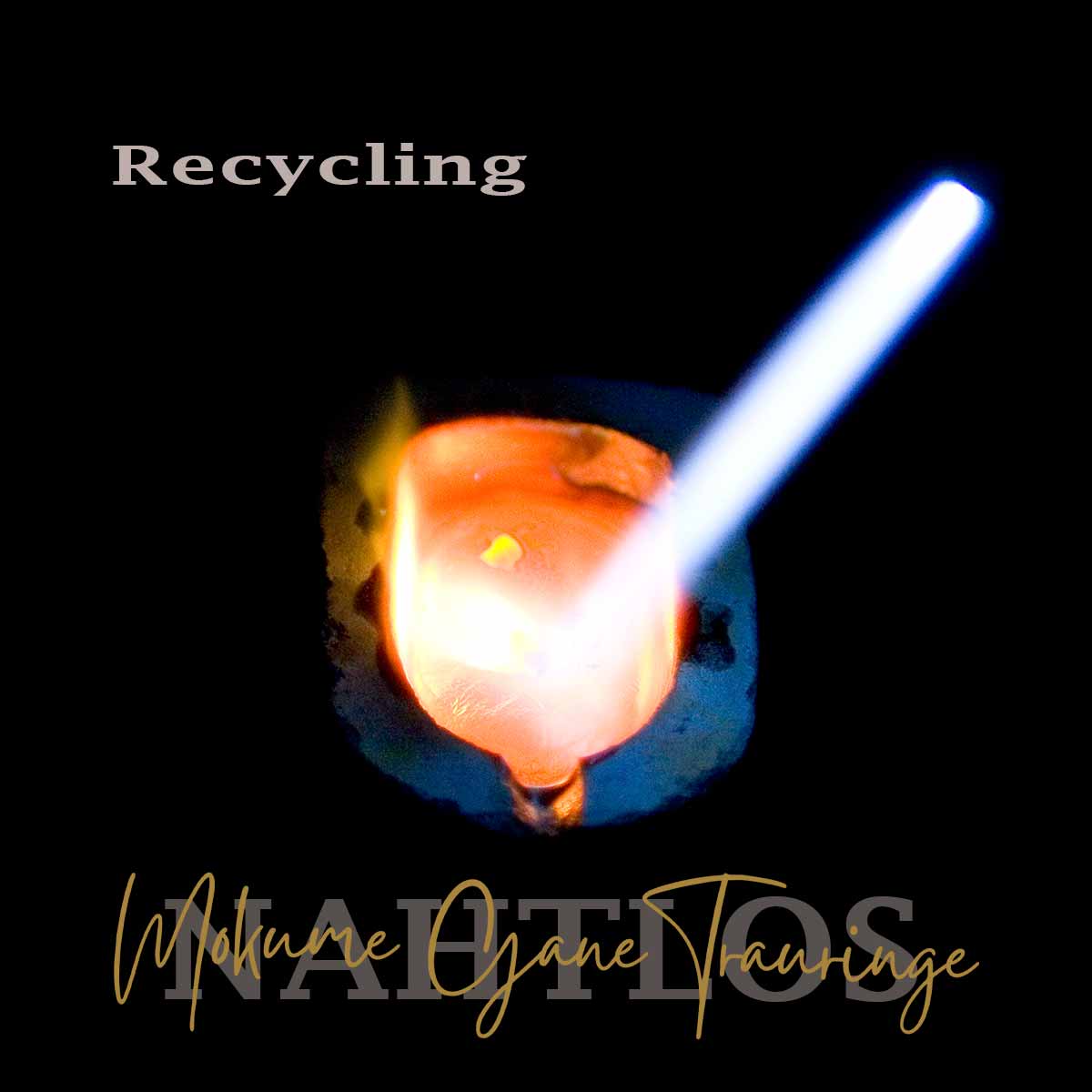
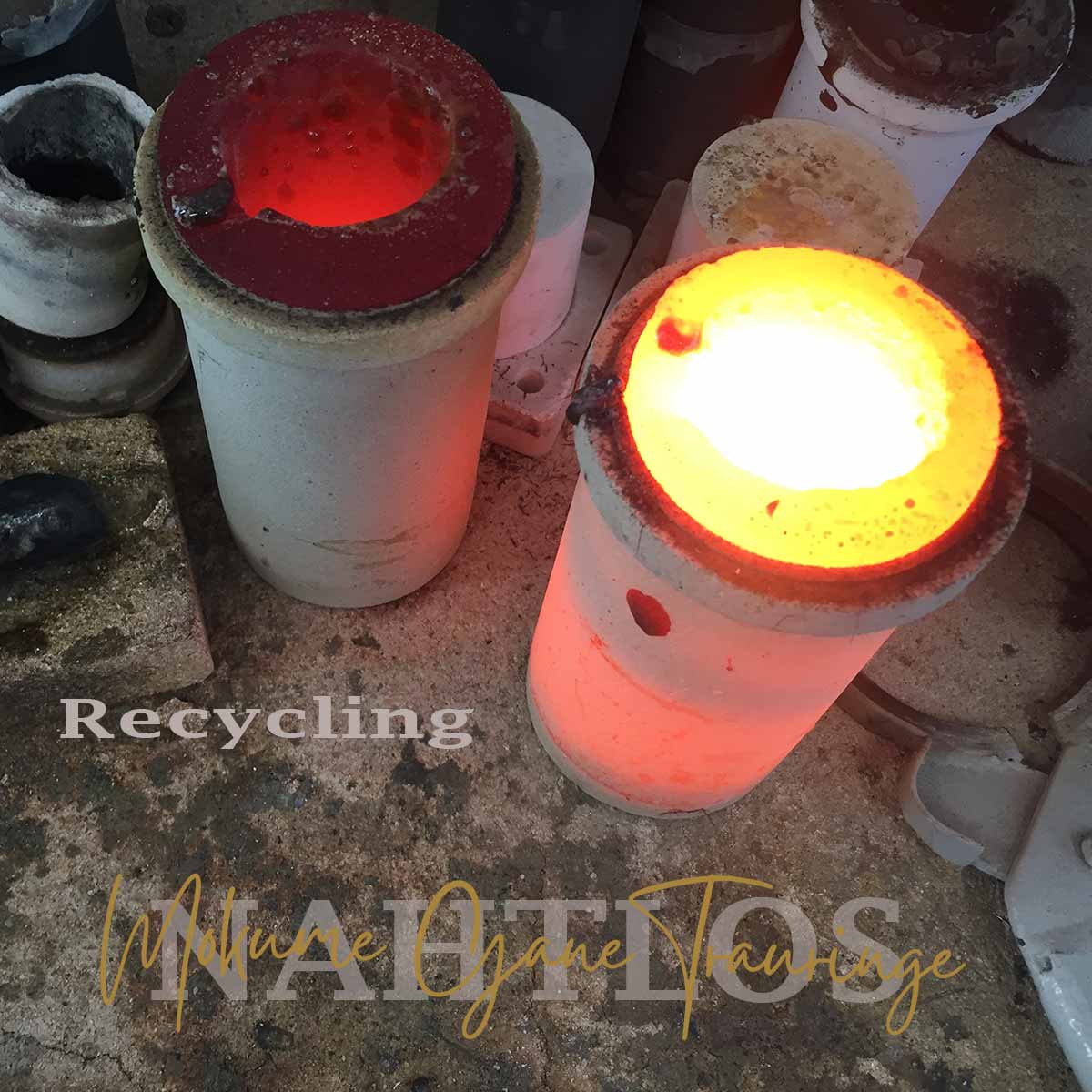
During refining, precious metals are separated from other components and recovered in high purity.
For jewelry production, the recovered fine gold can then be realloyed with precisely defined proportions of other metals. This results, for example, in 585 or 750 yellow gold, rose gold, or other gold alloys with the desired properties.
The key point, therefore, is this: The history of the gold does not determine the quality of the new alloy.
Recycled gold and family heirloom gold are not the same thing
This distinction is particularly important for our goldsmithing practice.
In traditional precious metal recycling, scrap gold is returned to a material cycle. After refining and re-alloying, it is no longer possible to determine which individual gold atom came from which original piece of jewelry.
With family gold, however, it is precisely this origin that may be part of the request. An old wedding ring from the grandparents, a ring from the mother, or several pieces of jewelry from both families should not merely be offset against one another, but should live on physically in a new piece of jewelry.
In such cases, we assess the existing material on a case-by-case basis. Depending on the alloy and the planned piece of jewelry, it can be processed directly, supplemented, or specifically realloyed. We provide more information on this on our page Wedding Rings Made from Family Gold and Old Gold.
Can 333 gold be turned back into 585 or 750 gold?
Yes. The number stamped on an old piece of jewelry does not determine the fineness of a subsequent piece.
333 gold contains 333 parts per thousand of gold, 585 gold contains 585 parts per thousand, and 750 gold contains 750 parts per thousand. If an existing alloy is professionally processed and its composition is adjusted accordingly, a new alloy with a different fineness can be created.
With heirloom gold, for example, an alloy with a higher gold content can be produced by adding fine gold and, if necessary, other alloying metals. The best approach depends on the available material and the desired result.
Why is gold so well-suited for recycling?
Gold possesses a property that is exceptional for a recyclable material: it is not consumed through proper recycling.
Jewelry can be worn, melted down, refined, and the gold it contains can then be reused. In principle, this cycle can be repeated indefinitely.
This distinguishes gold from many materials whose properties deteriorate significantly with repeated use or processing.
Is recycled gold more sustainable?
Reusing existing gold can reduce the need for additional newly mined gold. This is a significant advantage, as primary gold extraction involves mining, material transport, energy consumption, and impacts on the landscape and environment.
Nevertheless, the term “sustainable” should not be used too lightly. Even scrap gold must be collected, transported, analyzed, melted down, and, if necessary, refined. Recycling, therefore, also involves effort.
Furthermore, recycling does not automatically address the issue of responsible supply chains. For recycled precious metals as well, origin, documentation, and responsible handling within the supply chain are relevant.
From our perspective, the more accurate statement is therefore: Reusing existing gold makes sense because a valuable raw material that has already been extracted can be used again.
Recycled Gold in Mokume Gane
For our Mokume Gane rings, the quality and exact composition of the precious metals used are particularly important.
In Mokume Gane, different layers of precious metals are fused together and then forged and patterned. The individual alloys must not only produce the desired colors but also be technically suitable for joint processing.
Therefore, it is not a deciding factor for us whether the gold has been used at some point in the past. What matters is that we work with a defined alloy whose properties are suitable for our manufacturing process.
Can my own scrap gold be used in Mokume Gane?
This must be assessed on a case-by-case basis.
With Mokume Gane, it is not enough for a material to simply be “gold.” The composition of the individual alloys influences their behavior during welding and forging, as well as the subsequent color effect of the pattern.
However, suitable family gold can be intentionally incorporated into a new piece of jewelry, depending on the source material and design. In this way, the history of an existing piece of jewelry can be combined with the unique structure of Mokume Gane.
Recycled gold or your own family gold—what’s the difference for the customer?
| Recycled gold | Family gold |
| Gold from existing sources is returned to the precious metal cycle. | A specific personal piece of jewelry or its material is meant to live on. |
| After refining, the defined material quality takes center stage. | In addition to material quality, the specific origin of the gold is important. |
| The original form and origin of the individual piece of jewelry no longer matter for the new material. | The connection to the original piece of jewelry is expressly desired. |
| Like other professionally processed gold, it is suitable for high-quality jewelry alloys. | Suitability must be assessed based on the specific material delivered. |
Recycled Gold at a Glance
| What is recycled gold? | Gold that has already been used and is reintroduced into the precious metal cycle. |
| Is it of lower quality? | No. When processed properly, the gold’s history is not a factor in its quality. |
| Can high-quality jewelry be made from it? | Yes. The key factors are purity, alloy, and professional craftsmanship. |
| Is recycled gold the same as heirloom gold? | No. With heirloom gold, the goal is usually to preserve the material from a very specific piece of personal jewelry. |
| Can recycled gold be used for Mokume Gane? | Yes, provided that the specific alloys required for the process are produced from it. |
Frequently Asked Questions About Recycled Gold
Is recycled gold real gold?
Yes. Recycled gold is not a substitute material. The gold it contains is the same chemical element as newly mined gold.
Can you tell by looking at a piece of jewelry that it’s made from recycled gold?
No. The color and properties are determined by the finished alloy and its craftsmanship, not by whether the gold it contains has been used before.
Is recycled gold less durable?
No. In a properly manufactured alloy, durability depends on the composition, design, and craftsmanship—not on the gold’s history.
Can old gold jewelry simply be melted down?
Not necessarily. Old jewelry may contain different alloys, solders, and other components. Before it can be reused, it’s therefore necessary to determine exactly what materials are present and what processing is required.
Can I use my own old jewelry to make new wedding rings?
Very often, yes. At our goldsmith’s workshop, we examine the existing old or heirloom gold and discuss whether it should be processed directly, supplemented, or realloyed.
Can existing diamonds also be reused?
That is also often possible. Existing diamonds or other gemstones can be set out and incorporated into a new piece of jewelry, provided their condition, size, and the planned setting are suitable.
Our conclusion from the goldsmith’s workshop
Recycled gold is not second-rate gold. When precious metal is professionally recovered and processed into a specific alloy, its past does not determine the quality of the new piece of jewelry.
For us as goldsmiths, therefore, the responsible use of the existing material is of paramount importance. Gold is too valuable not to be reused.
This idea becomes even more personal when it’s not just any recycled gold, but your own family’s gold that is to live on. That’s when the material cycle and memories come together: something completely new can be created from old rings, necklaces, or other pieces of jewelry without the material’s history being lost.
You can find more information on gold, alloys, and fineness in our guide section on precious metals.

