White Gold – Properties, Alloys, and Uses in Jewelry
First published on June 13, 2024 – comprehensively revised and technically updated on September 5,2026 · Illustrations used: AI-generated
Today, white gold is one of the most important gold alloys in jewelry making. Its light, understated hue is particularly popular for wedding bands, engagement rings, and diamond jewelry.
However, white gold is not a naturally white form of gold. Pure gold is yellow. The light hue is created by alloying gold with other metals, which tone down its original yellow color.
Depending on its composition, white gold can appear more silvery, gray, slightly warm, or nearly pure white. In addition, many white gold jewelry pieces are rhodium-plated. This gives the surface a very light, cool hue.
What is white gold?
White gold is a gold alloy. This means that fine gold is combined with other metals to specifically alter the material’s color and technical properties.
Which metals are added depends on the specific alloy formula. For example, palladium or nickel can be used to lighten the gold. Silver, copper, and other alloy components may also be included, depending on the formula.
Therefore, there is no such thing as “the one and only white gold.” Two white gold alloys with the same gold fineness can differ significantly in color, hardness, workability, and price.
Why isn’t white gold really white?
The starting point for every white gold alloy is gold—and gold naturally has an intense yellow hue.
The added metals lighten this hue. However, this does not necessarily result in a completely neutral white gold alloy. Many white gold alloys have a slightly gray, yellowish-gray, or warm undertone when untreated.
This is not a quality defect, but rather a result of the alloy’s composition.
Therefore, when someone sees a very light, almost mirror-like white piece of jewelry, they’re often not looking at the actual color of the white gold alloy, but rather an additional layer of rhodium.
585 and 750 white gold—what do the numbers mean?
As with other gold alloys, the number indicates the percentage of fine gold.
- 585 white gold: 585 out of 1,000 parts by weight, or 58.5 percent, consist of fine gold.
- 750 white gold: 750 out of 1,000 parts by weight, or 75 percent, consist of fine gold.
The remaining portion consists of the metals that, together with the gold, form the desired alloy.
A higher gold content does not automatically mean that a piece of jewelry is technically better suited for every purpose. The properties always depend on the overall composition of the alloy and how it is crafted.
You can find more information about the different finenesses in our guide “What Do 585, 750, and 950 Mean?”
Palladium White Gold and Nickel White Gold
An important distinction regarding white gold concerns the metals used to lighten the yellow color of the gold.
Palladium is a precious metal from the platinum group and is very well suited for the production of high-quality white gold alloys. Palladium-based white gold typically has a grayish-white undertone.
Another option is nickel. Nickel can lighten gold very effectively while also increasing the alloy’s hardness. However, nickel can cause allergic skin reactions in people who are sensitive to it.
Nickel is not generally prohibited in jewelry within the European Union. However, for jewelry that comes into prolonged or continuous contact with the skin—such as rings—there are legally established limits on nickel release.
Anyone who already knows they have a nickel allergy should therefore ask about the specific alloy when purchasing a piece of white gold jewelry.
What does rhodium plating mean for white gold?
Many pieces of white gold jewelry are rhodium-plated after they are finished. In this process, a very thin layer of rhodium is applied to the surface.
Rhodium belongs to the group of platinum metals and has a very bright, silvery-white color. Rhodium plating therefore gives white gold the particularly cool and bright hue that many people associate with white gold.
However, it’s important to note: Rhodium plating is a surface coating. It is not the actual white gold alloy.
Does the rhodium plating wear off?
Yes. A rhodium coating can wear off over time with wear.
How quickly this happens depends largely on the piece of jewelry and how it is worn. For example, a ring worn daily is subjected to significantly more mechanical stress than a pendant.
If the rhodium coating becomes thinner in areas subject to heavy wear, the actual color of the underlying white gold alloy will reappear there.
This does not mean that the white gold has deteriorated. It is simply normal wear and tear on the surface coating.
The rhodium plating can be renewed through professional restoration of the piece of jewelry.
Does white gold always have to be rhodium-plated?
No. White gold does not necessarily have to be rhodium-plated.
Whether rhodium plating is advisable or desired depends on the alloy used and the desired appearance.
A good white gold alloy already has a light color of its own. Without rhodium plating, it usually appears slightly softer and grayer than a rhodium-plated surface.
Especially with handcrafted jewelry, this more natural white gold tone can certainly have its own charm.
White gold or platinum—what’s the difference?
At first glance, white gold and platinum look similar, but metallurgically they are completely different materials.
White gold is a gold alloy. Platinum, on the other hand, is a precious metal in its own right.
Their weight also differs significantly. Platinum has a very high density and, for an otherwise comparable ring, feels correspondingly heavier.
Another difference lies in the color. Platinum naturally has a light gray-white hue. White gold, on the other hand, is created by alloying gold with lightening metals and is often rhodium-plated as well.
Which material is more suitable depends on the design, weight, comfort, alloy, and personal taste.
You can find detailed information about platinum in our guide to platinum as a jewelry metal.
White gold or silver?
Silver and white gold can also look similar. However, the composition of the materials differs fundamentally.
Silver is a precious metal in its own right and is used in jewelry, for example, as 925 sterling silver. White gold, on the other hand, consists largely of gold.
Another practical difference: Silver can visibly tarnish due to reactions on its surface. High-quality white gold alloys do not exhibit this typical dark tarnish seen in silver.
You can find more on this topic in our guide to silver as a jewelry metal.
Is white gold harder than yellow gold?
There is no one-size-fits-all answer to this question. When it comes to jewelry, we’re not comparing pure metals, but rather alloys with different compositions.
Certain white gold alloys can indeed be harder than certain yellow gold alloys. However, no general rule can be derived from this.
Fineness, alloy components, workmanship, and the condition of the material significantly influence hardness and malleability.
Therefore, the statement “white gold is harder than yellow gold” is overly simplified without specifying the exact alloy.
Why is white gold particularly well-suited for diamonds?
The light and understated color of white gold harmonizes very well with colorless diamonds.
This is particularly interesting when it comes to settings: The light-colored metal draws little visual attention away from the stone and blends harmoniously with a diamond’s bright appearance.
That is why white gold has been particularly popular for many decades, especially for engagement rings, solitaire rings, and diamond-set wedding bands.
White Gold for Wedding Bands
White gold is also a tried-and-true material for wedding bands.
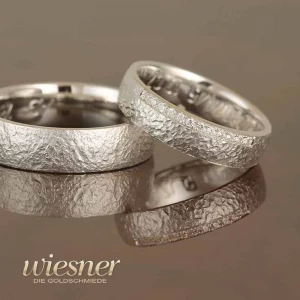
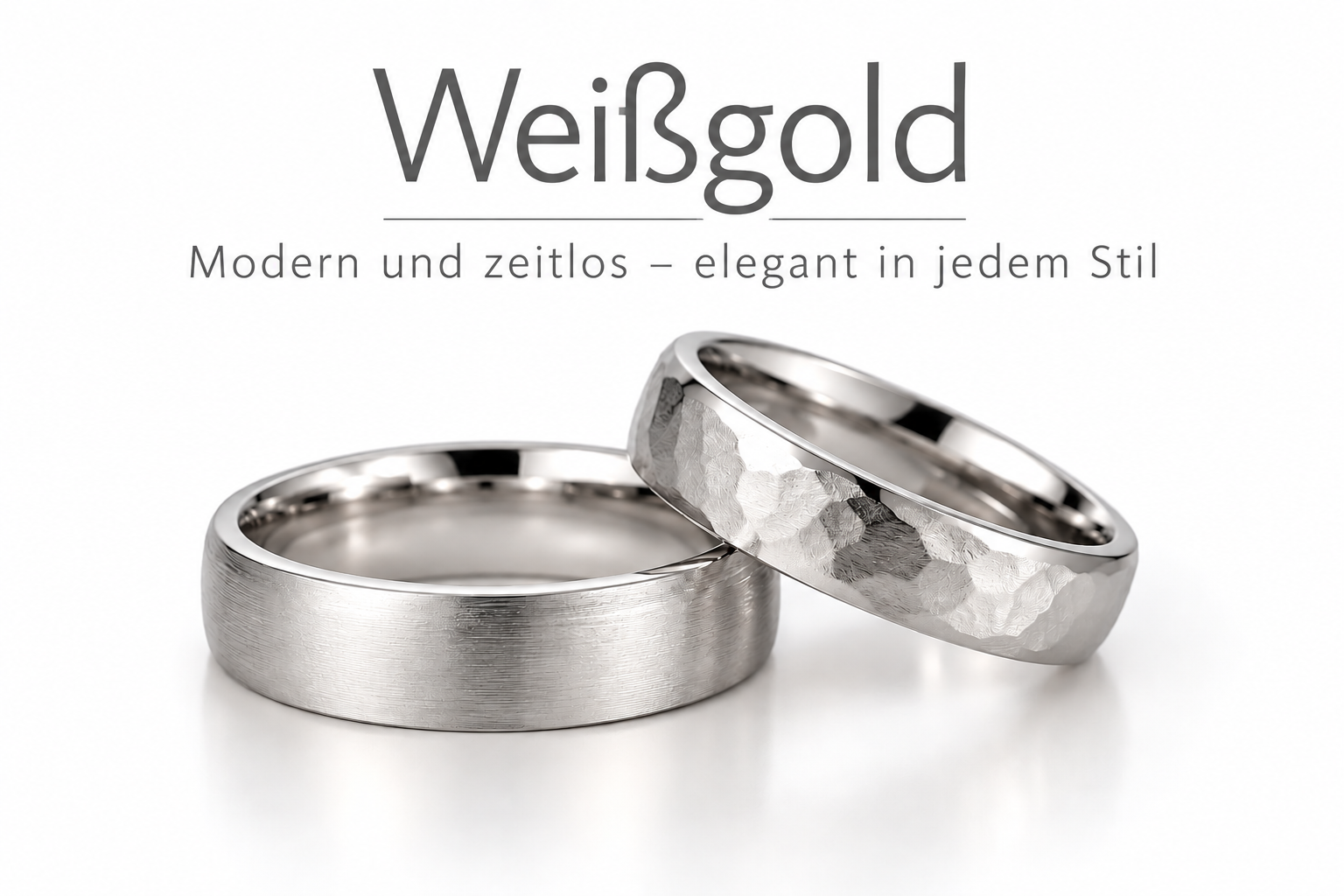
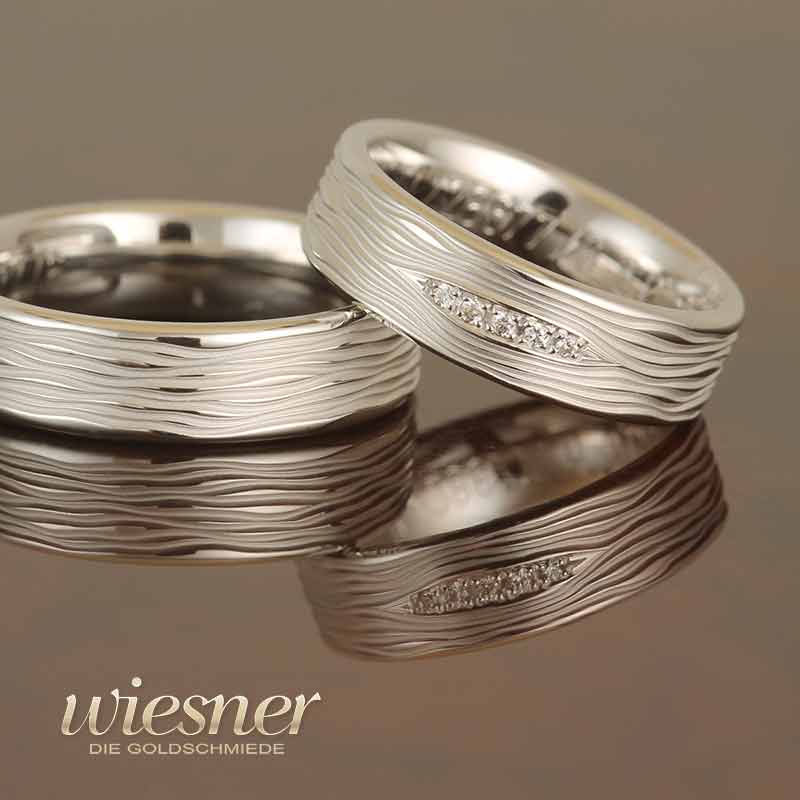
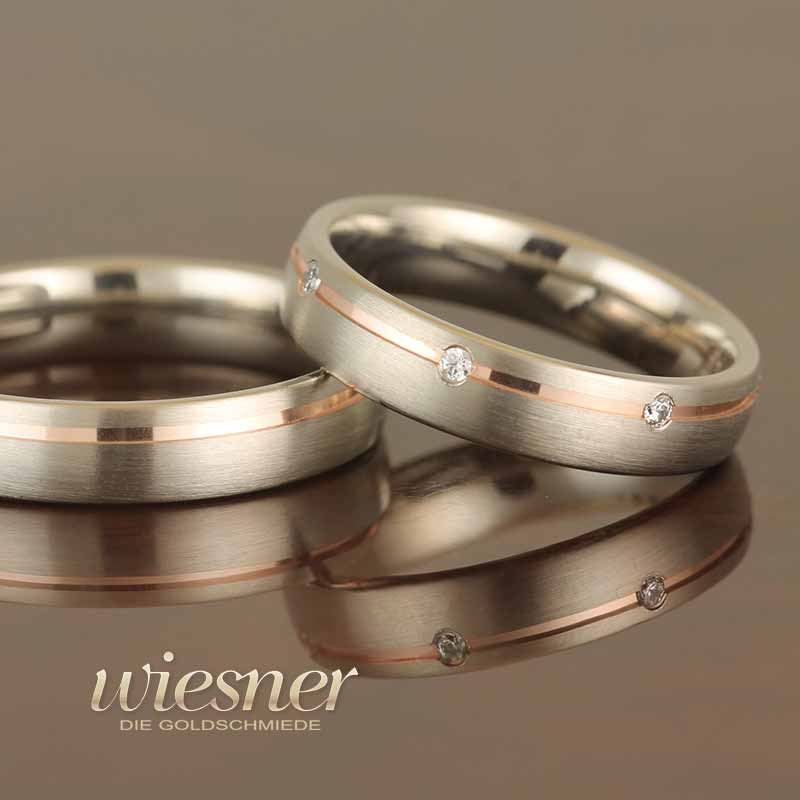
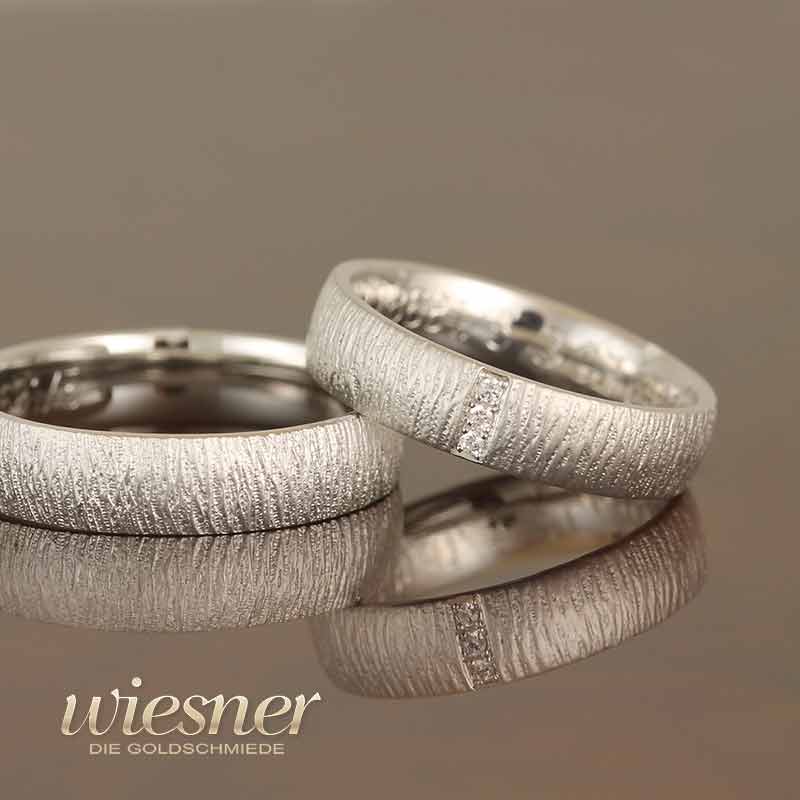
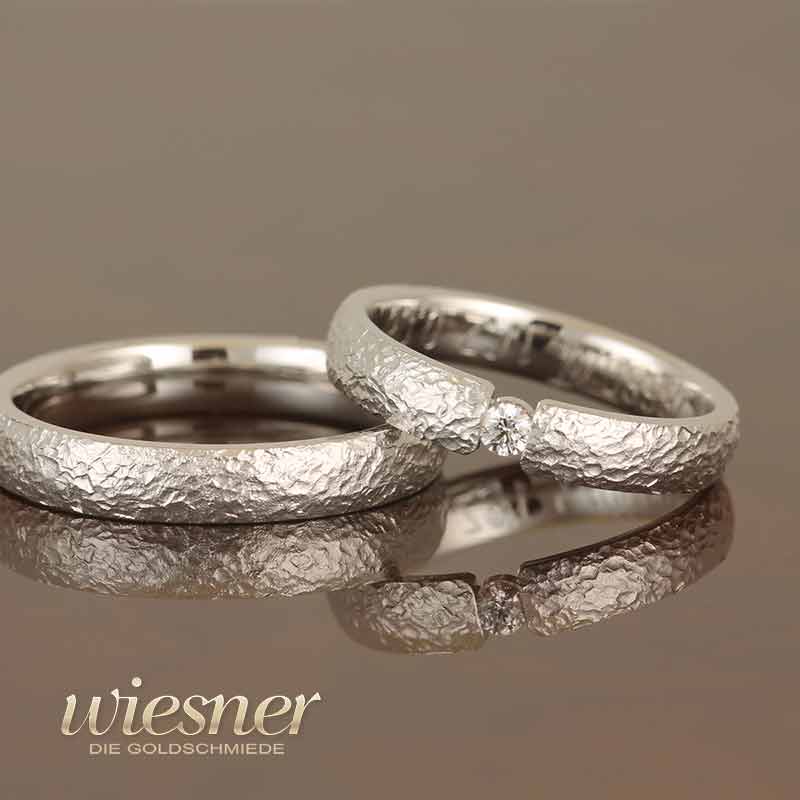
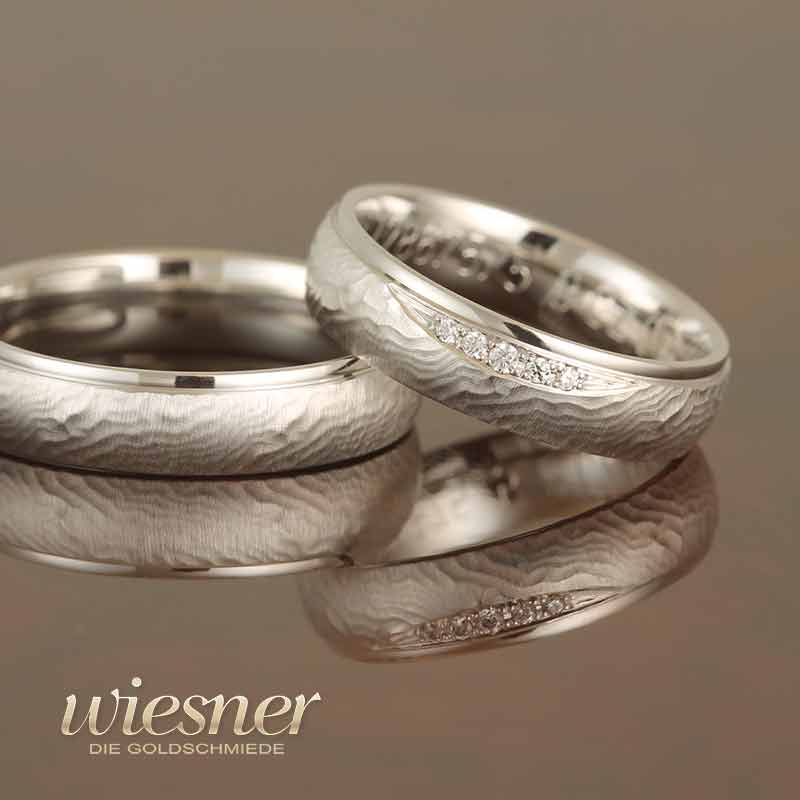
Its neutral hue complements a wide variety of ring designs and can be combined with polished, matte, or textured finishes.
In our selection, for example, you’ll find white gold wedding bands in various alloys and designs.
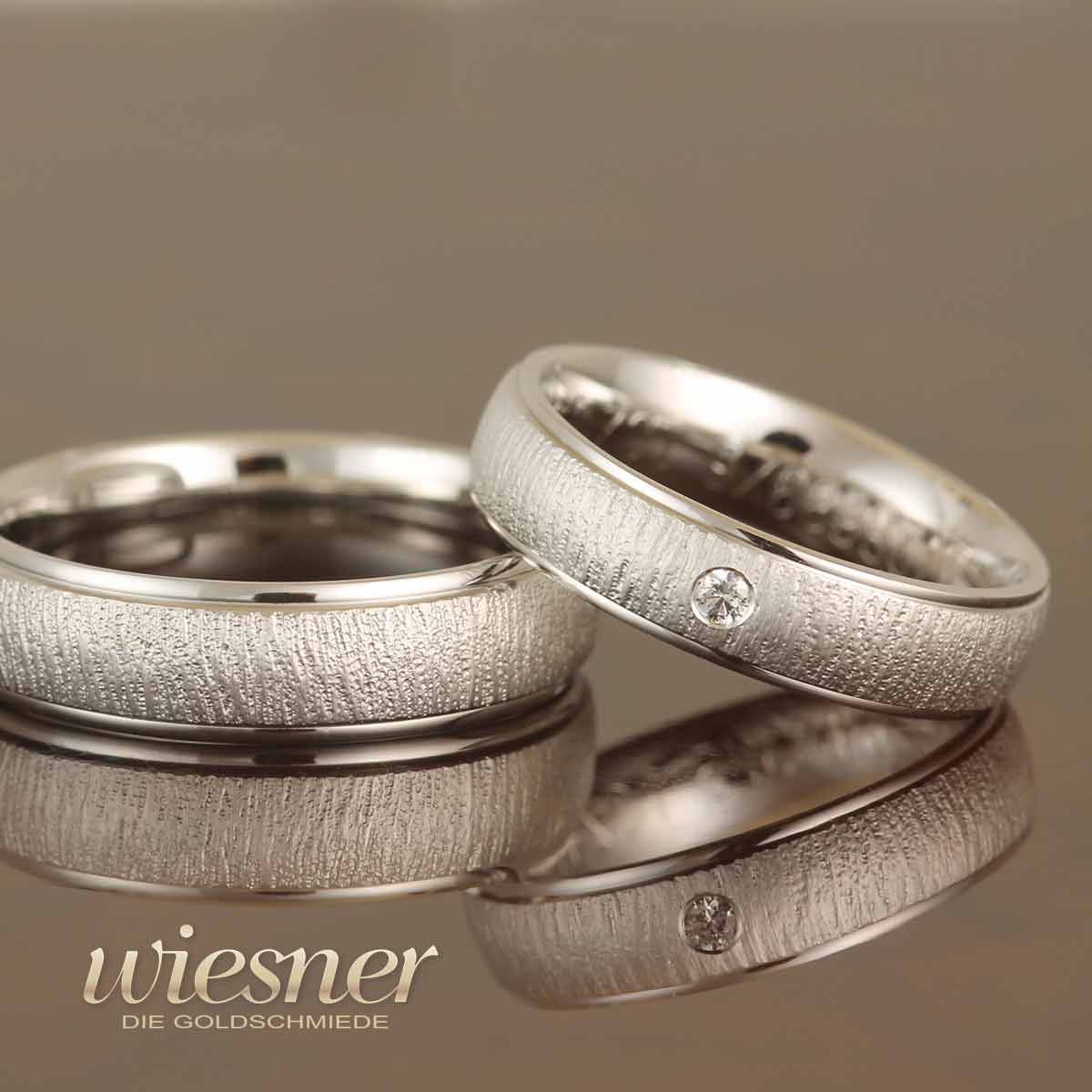
One example is this pair of Gerstner wedding rings with a textured surface and a diamond:
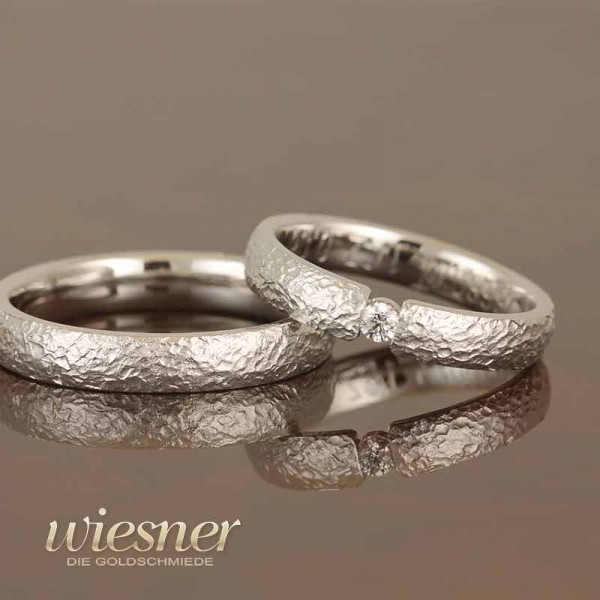
With this model, you can choose between different white gold finenesses. This clearly illustrates that “white gold” alone is not a complete description of the material. Fineness, alloy, construction, and finish are all factors to consider when selecting a ring.
White Gold in the Goldsmith’s Workshop
From a goldsmith’s perspective, white gold is a versatile material, but by no means always identical.
Depending on the alloy, white gold can behave differently during rolling, forging, soldering, polishing, and other processing steps. That’s why it’s important to know the specific alloy and tailor the craftsmanship accordingly.
This also plays a role in repairs or alterations. A piece of jewelry should therefore not be classified as “white gold” solely based on its light color.
White Gold and Mokume Gane
In Mokume Gane, the effect of a piece of jewelry arises from the interplay of different metal colors and layers.
Light-colored precious metals or light-colored alloys can create an attractive contrast to yellow gold, rose gold, or other warm metal colors.
However, which alloys can be combined is a technical question and depends, among other things, on the properties of the metals used and the manufacturing process.
Our Mokume Gane rings showcase what such multicolored metal structures look like in our workshop.
White Gold at a Glance
| Material Type | Gold Alloy |
| Base color | Light gray to silvery, depending on the alloy |
| Common finenesses | 585 and 750 |
| Brightening alloying metals | e.g., palladium or nickel |
| Rhodium plating | common, but not strictly required |
| Typical uses | Wedding bands, engagement rings, diamond jewelry, pendants, and earrings |
| Special feature | A light-colored gold alloy with technical properties that vary depending on the formula |
Frequently Asked Questions About White Gold
Is white gold real gold?
Yes. White gold is a genuine gold alloy. In 585 white gold, 58.5 percent of the weight consists of fine gold; in 750 white gold, 75 percent of the weight consists of fine gold.
Why is white gold white, even though gold is yellow?
Metals are added to the gold that significantly lighten its yellow hue. Depending on the alloy, this results in a gray to silvery-white hue. An additional rhodium plating can make the surface appear even lighter.
Does white gold turn yellow over time?
White gold itself does not revert to yellow gold. However, with rhodium-plated jewelry, the rhodium layer can wear off. When this happens, the underlying, usually slightly warmer hue of the actual white gold alloy becomes visible.
Does white gold always have to be rhodium-plated?
No. Rhodium plating is an additional surface treatment and not a requirement for an alloy to be classified as white gold.
Can white gold contain nickel?
Yes, there are white gold alloys that contain nickel. There are also white gold alloys in which, for example, palladium is used to lighten the color. If you have a known nickel allergy, you should check the specific alloy composition before purchasing.
Does white gold tarnish?
White gold does not exhibit the typical dark tarnish seen in silver. Changes in appearance in worn jewelry are primarily caused by signs of wear and, in some cases, by the wear away of the rhodium plating.
Is white gold suitable for wedding rings?
Yes. Suitable white gold alloys have been used for wedding rings for many decades. Which alloy is best depends on the design, desired fineness, finish, and personal preferences.
Our Conclusion from the Goldsmiths
White gold is much more than just “white gold.” Behind its light color lie different alloy formulations, fineness levels, and surface treatments.
That is precisely why it’s worth paying attention to more than just the label “white gold” when making a purchase. Whether 585 or 750, a palladium- or nickel-containing alloy, rhodium-plated or natural in color: these differences influence the appearance, craftsmanship, and long-term performance of a piece of jewelry.
For wedding bands, engagement rings, and diamond jewelry, however, white gold remains a particularly versatile material. Its calm, light color pairs well with both classic and modern jewelry designs.
You can find more basic information in our guide to precious metals and gold alloys.