
First published on May 1, 2025 · Comprehensively revised and technically updated on September 17, 2026 · Illustrations used: AI-generated
Osmium—an extraordinary metal from the platinum group
Osmium, along with platinum, palladium, rhodium, ruthenium, and iridium, belongs to the so-called platinum metals. Its physical properties alone make it unusual: Osmium has an extremely high density and is very hard yet brittle.
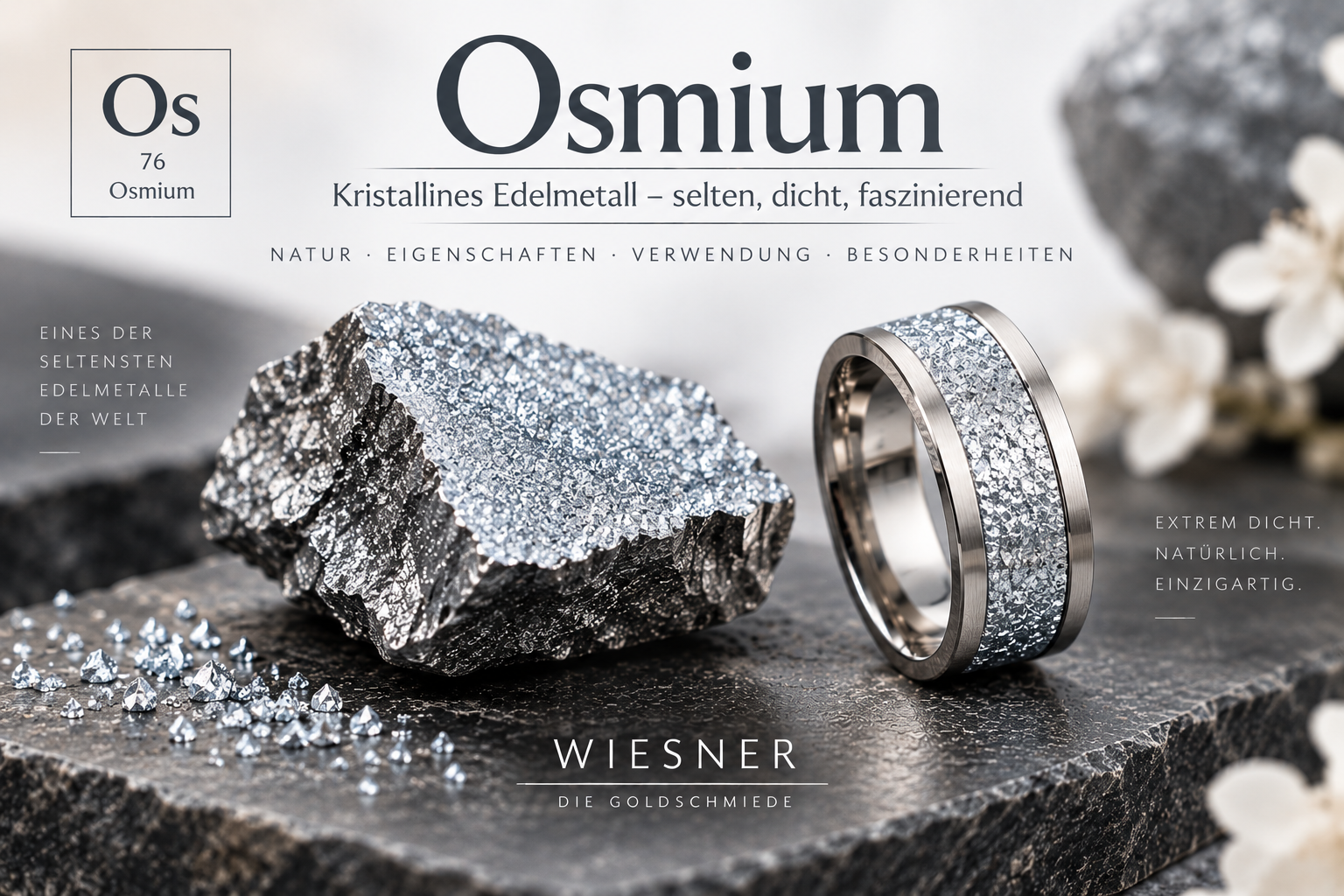
Today, crystalline osmium is of particular interest for jewelry. Its finely textured surface reflects light through numerous small facets, creating a look that differs significantly from a classically polished metal surface.
Osmium is not yet one of the jewelry metals we regularly work with. We are currently exploring the possibilities of this material and gauging just how much interest there actually is in osmium jewelry and osmium rings.
What is osmium?
Osmium has the chemical symbol Os and the atomic number 76. It is a chemical element and belongs to the platinum group of metals.
Osmium occurs naturally only in very low concentrations. It is found primarily in combination with other platinum group metals and, unlike gold, is not mined in large quantities as a traditional raw material for jewelry.
This dense metal has a bluish-white to silvery appearance. Its exceptionally high density, as well as its hardness and brittleness, are particularly noteworthy.
Is osmium really the densest metal?
Osmium is often referred to as the densest known element. Its density is approximately 22.6 g/cm³, which is exceptionally high.
However, osmium and iridium are very close in density. Depending on the measurement and calculation method, slightly different values may be reported. For practical purposes, therefore, it can be stated that osmium, together with iridium, is among the densest known elements.
By comparison, gold has a density of about 19.3 g/cm³, and platinum about 21.5 g/cm³. Osmium is thus exceptionally dense even compared to these already heavy precious metals.
Why does crystalline osmium look so special?
The striking appearance of crystalline osmium is not the result of a traditional high-gloss polish. Rather, it is due to its finely structured crystalline surface.
Numerous small surfaces reflect incoming light from different angles. This creates a lively sparkle that changes depending on the lighting and the viewing angle.
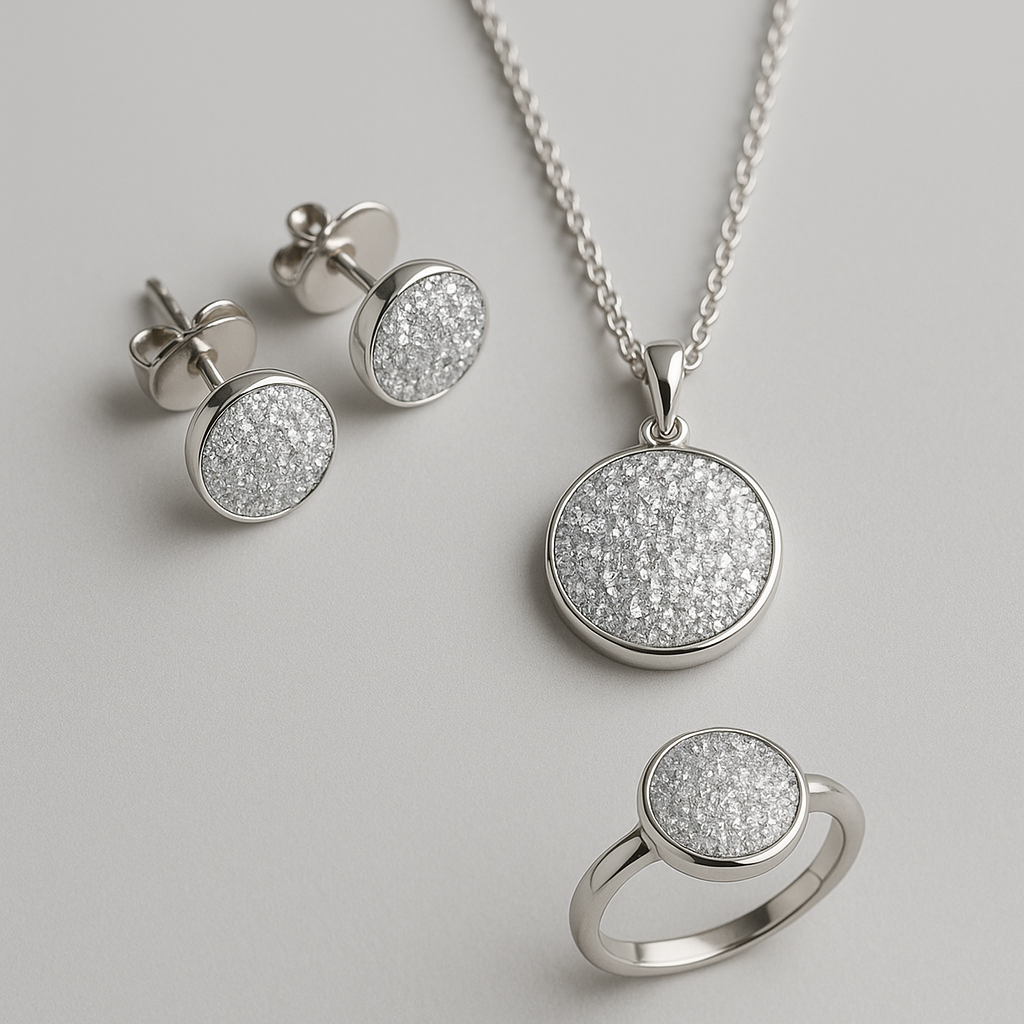
It is precisely this surface effect that makes osmium appealing to jewelry designers. The material does not need to be used over a large area; even a small inlay can create a striking visual accent.

How can osmium be used in jewelry?
Osmium is not a traditional goldsmithing metal that can be simply forged and shaped into a ring the way gold, silver, or platinum can be. Compact osmium is hard and brittle, making it only partially suitable for traditional forming techniques.
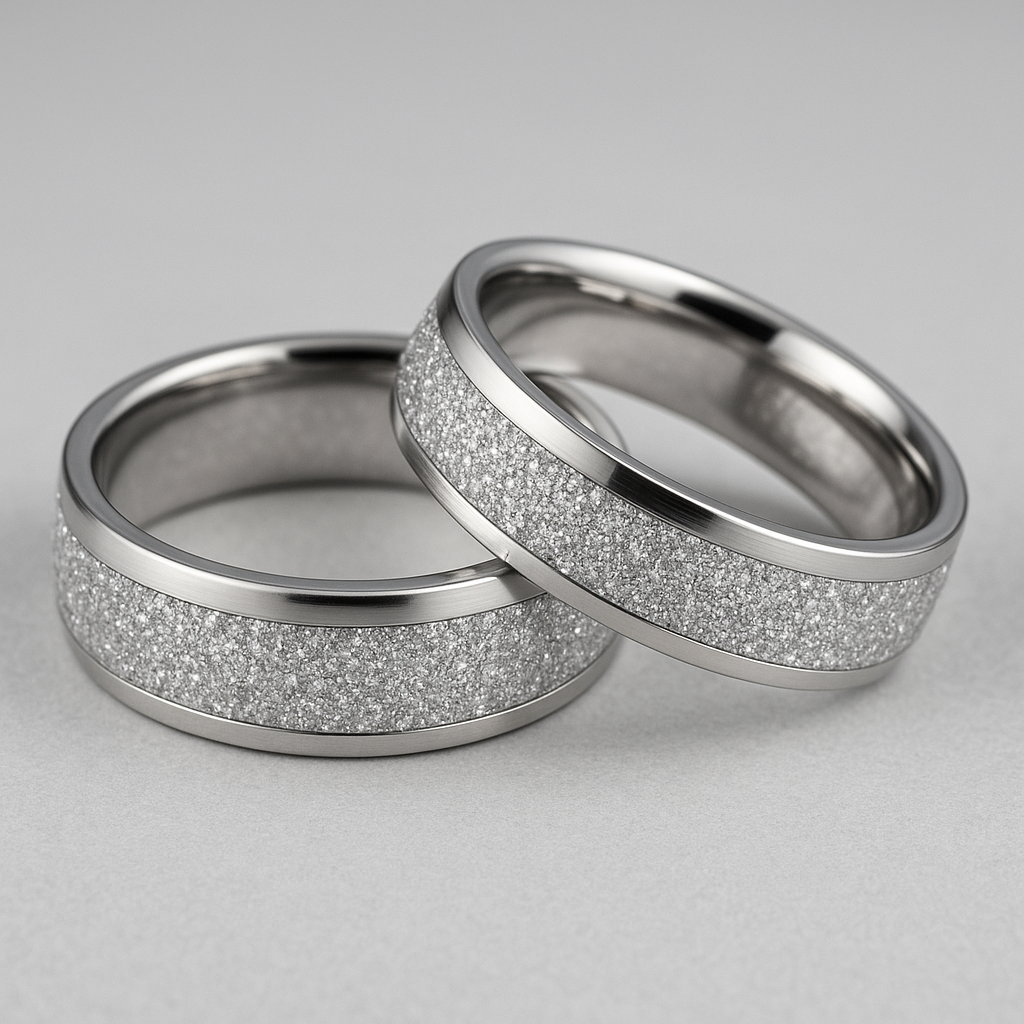
For jewelry, therefore, the use of crystalline osmium as a design element or inlay is particularly appealing. It can be combined with suitable carrier materials and traditional jewelry metals.
From a design perspective, this is precisely what makes it so appealing: a relatively small area of crystalline osmium can create a striking contrast to a subdued gold, platinum, or palladium surface.
Osmium is not the same as osmium tetroxide
When discussing osmium, one quickly encounters references to its toxicity. Here, a clear technical distinction must be made.
Osmium tetroxide (OsO₄) is a highly toxic and volatile osmium compound. It must not be equated with a finished jewelry element made of crystalline osmium.
Osmium in a particularly fine dispersion is problematic because its larger surface area can promote oxidation and, consequently, the formation of osmium tetroxide. Production and processing must therefore be entrusted to appropriately specialized professionals.
For consumers, therefore, it is not only the term “osmium” that matters, but also the form in which the material is used and the manufacturing process involved.
A Comparison of Osmium, Platinum, and Gold
| Property | Osmium | Platinum | Gold |
| Metal Group | Platinum group | Platinum metal | Precious metal |
| Density | approx. 22.6 g/cm³ | approx. 21.5 g/cm³ | approx. 19.3 g/cm³ |
| Processing | Hard and brittle; requires special processing | Traditional, high-quality jewelry material | Very easy to alloy and work |
| Optical Characteristics | Crystalline, highly light-reflective surface | Naturally light color | Varied colors due to alloying |
Like platinum, osmium belongs to the platinum group of metals. If you’d like to learn more about this well-established jewelry metal, you can find information on its properties, processing, and uses in our guide to platinum.
You can also find a direct comparison of two classic jewelry and precious metals in the guide “Which Is More Valuable, Platinum or Gold?”.
Is osmium more valuable than gold?
This question cannot be answered solely based on the rarity of an element. Market price, availability, processing, form of trade, and demand also play a role.
In the case of crystalline osmium, there are also additional costs associated with its specialized processing. Therefore, price quotes for crystalline osmium cannot be directly compared to the exchange-traded price of gold.
When it comes to jewelry, osmium should first and foremost be considered an exceptional design material. Rarity or material properties alone do not justify a blanket statement that osmium is automatically a better investment than gold.
Is osmium a good choice for wedding rings?
Especially for wedding rings, the combination of a smooth ring surface with a highly reflective material could be appealing. Crystalline osmium, for example, can be used as a limited design element or inlay. We showcase one possible design with our osmium wedding rings, which we are currently using to gauge interest in such ring concepts.
Construction, protection of the material, comfort, and future refinishing options must be taken into account from the very beginning. A wedding ring worn daily poses different challenges than a pendant or a piece of jewelry worn only occasionally.
That is why we do not simply view osmium as a substitute for gold or platinum. The more interesting question is what unique design possibilities this material offers.

Osmium Jewelry at Wiesner—Currently a Market Test
Osmium fascinates us above all because of its unusual surface and the possibility it offers to create strong contrasts with classic jewelry metals.
However, we do not yet carry a regular osmium jewelry line, nor are we currently producing our own osmium collection. We are exploring the material and would first like to determine which jewelry ideas are actually in demand.
That’s why we’ve set up our Osmium Jewelry and Osmium Rings section. There, we’re specifically exploring this topic and observing which applications and types of jewelry generate particular interest.
If you’re specifically interested in a ring, wedding bands, or another piece of jewelry made with crystalline osmium, please feel free to contact us. Such specific requests help us assess which direction might be of interest for future jewelry designs.
Frequently Asked Questions About Osmium
What is Osmium?
Osmium is a chemical element with the symbol Os and atomic number 76. It is one of the six platinum group metals and is characterized, among other things, by its exceptionally high density as well as its great hardness and brittleness.
What color is osmium?
Metallic osmium is usually described as bluish-white to silvery. In crystalline osmium, the visual appearance is also strongly influenced by the textured surface and the lighting.
Can a ring be made entirely of osmium?
Osmium is much less suitable for traditional goldsmithing techniques than gold, silver, or platinum. For jewelry, therefore, crystalline osmium is particularly interesting as an inlay or design element.
Is osmium toxic?
Here, a distinction must be made between different forms and compounds. Osmium tetroxide, a highly toxic and volatile osmium compound, is particularly hazardous. Even finely dispersed osmium must be handled properly. A finished jewelry piece made of crystalline osmium should not be equated with this in general.
Is osmium heavier than gold?
Yes. With a density of approximately 22.6 g/cm³, osmium is denser than gold, which has a density of about 19.3 g/cm³. Even compared to platinum, which has a density of about 21.5 g/cm³, osmium is among the denser elements.
Is osmium more valuable than gold?
A direct comparison is difficult. The price of crystalline osmium is influenced by factors such as rarity, processing, form of trade, and demand, and cannot be directly compared to the exchange-traded price of gold.
Does Wiesner already work with osmium?
At this time, we do not yet offer a regular line of osmium jewelry. We are exploring the possibilities of the material and closely monitoring interest in jewelry and rings made with crystalline osmium.
Our Conclusion from the Goldsmith’s Workshop
Osmium is particularly interesting to us because it differs significantly from traditional jewelry metals. Its extreme density, hardness, and—in particular—the extraordinary surface of crystalline osmium open up design possibilities that gold, silver, or platinum simply do not offer.
At the same time, osmium is not a material that should simply be treated like a traditional goldsmithing material. Its unique properties require suitable designs and specialized processing methods.
We do not wish to speculate on whether this will actually lead to our own pieces of jewelry or a small collection in the future. That is precisely why we are keeping a close eye on this topic—and, above all, on the specific requests we receive regarding osmium jewelry.