
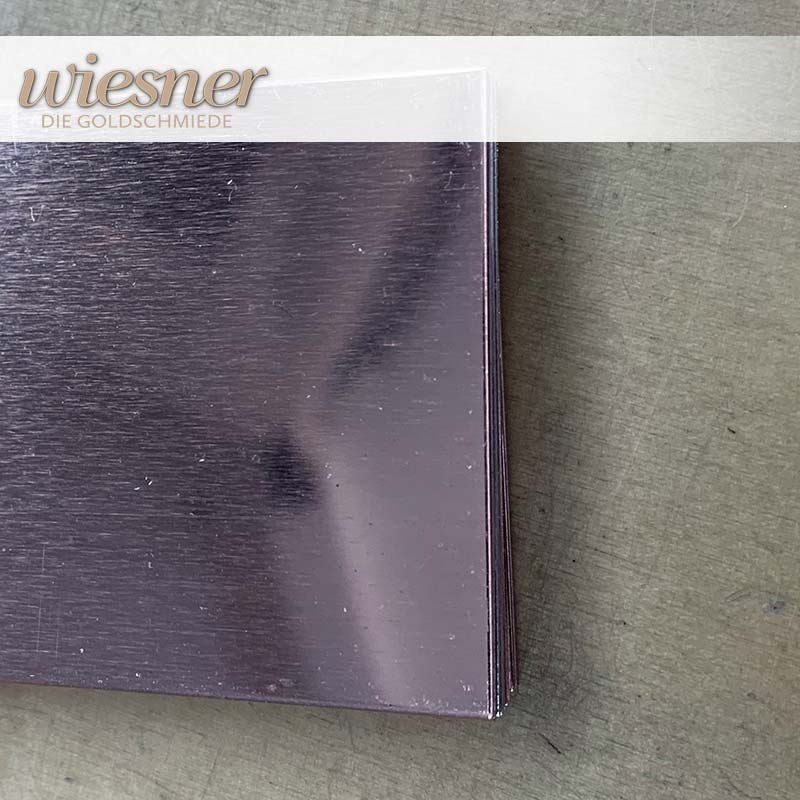
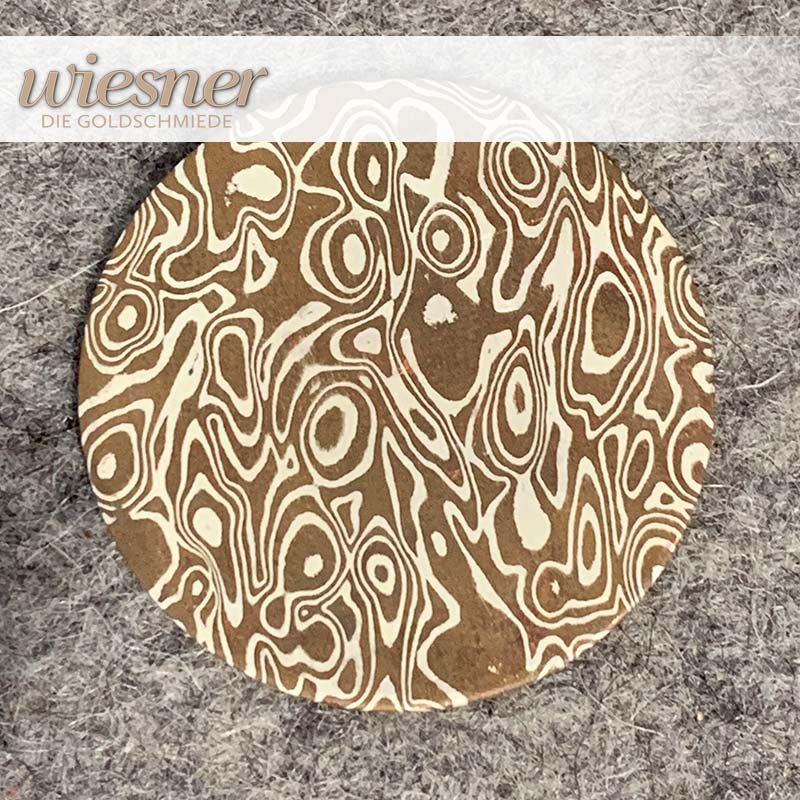
Shakudo – A Japanese Copper-Gold Alloy and Its Connection to Mokume Gane
First published on December 1, 2023 – comprehensively revised and technically updated on September 9,2026 · Illustrations used: AI-generated
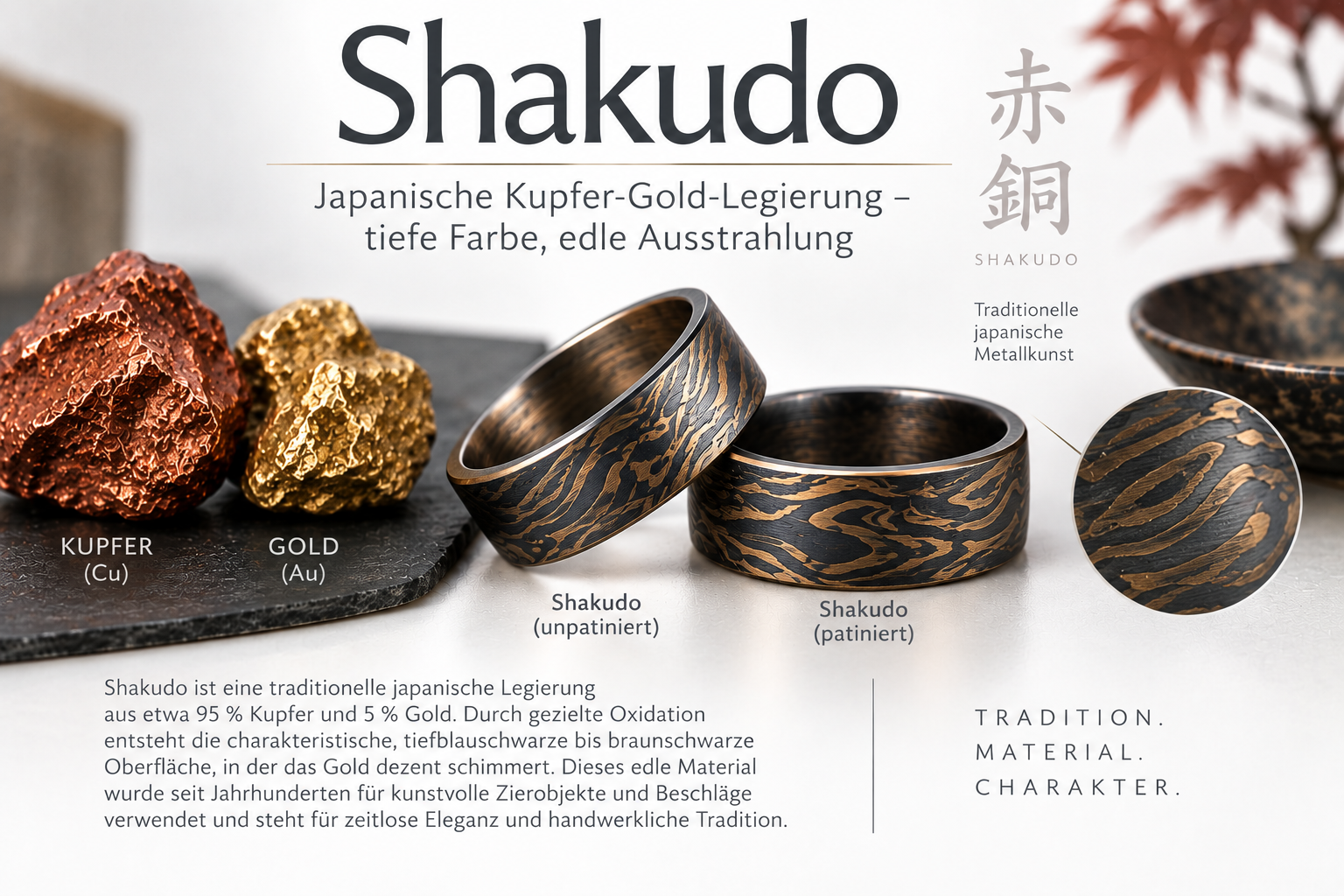
Shakudo—more precisely, Shakudō—is one of Japan’s traditional metal alloys. What makes it special is not so much the base color of the metal as its surface, which can appear very dark to nearly black due to a deliberate patination process.
It is primarily composed of copper with a comparatively small amount of gold. Shakudo is therefore neither a gold alloy in the sense commonly used today in jewelry nor a distinct forging technique.
Nevertheless, the term frequently appears, particularly in connection with Mokume Gane. Both are part of Japanese metal art and were sometimes used together with other alloys.
What is Shakudo?
Shakudo is a copper-rich alloy with a small amount of gold. The exact composition can vary depending on the historical recipe and intended use.
The subsequent surface treatment is crucial to its characteristic appearance. Through controlled patination, shakudo can develop a deep brown, violet-black to nearly black surface.
The gold is not intended to make the alloy appear visibly golden. Rather, even small amounts of gold influence the behavior of the copper alloy during patination and thus the resulting color.
Is shakudo a precious metal?
Strictly speaking, no. Shakudo is not a precious metal in its own right, but rather a copper alloy containing gold.
Its main component, copper, is not one of the traditional precious metals. Gold, on the other hand, is. The fact that shakudo nevertheless frequently appears in the context of high-quality goldsmithing and metalwork is due to its historical and artistic significance.
In our guide section on precious metals, we therefore treat shakudo as a related topic in metallurgy.
Why does shakudo turn dark?
Freshly worked shakudo initially looks much less striking. Its characteristic dark color only develops through a specific chemical surface reaction.
In traditional patination, a very thin, dark surface layer forms on the copper-rich alloy. The metal’s composition, surface preparation, and patination process all influence the result.
Therefore, the black or dark violet appearance of shakudo is not the result of applied black paint. It arises from a reaction occurring directly on the metal’s surface.
Shakudo in Japanese Metalwork
Shakudo is best known from historical Japanese metalwork. Particularly impressive examples can be found in the fittings and components of Japanese swords.
In so-called tsuba—the guard plates of Japanese swords—shakudo was used, for example, in combination with gold, silver, copper, and other traditional alloys.
The appeal lay in the strong color contrast. Darkly patinated shakudo could appear almost black next to gold or silver, thereby clearly highlighting even very fine inlays and ornaments.
Shakudo and Mokume Gane—what’s the difference?
Shakudo and Mokume Gane are often mentioned in the same breath, but they are not the same thing.
| Shakudo | a traditional copper-rich gold alloy |
| Mokume Gane | a metalworking technique in which different layers of metal are permanently bonded together and then worked into a visible grain pattern |
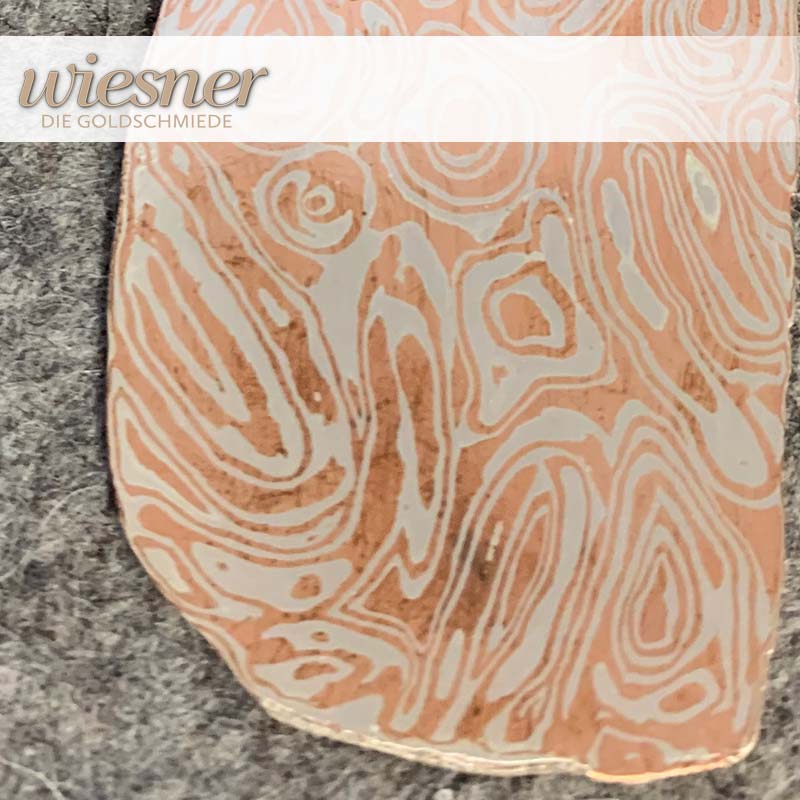
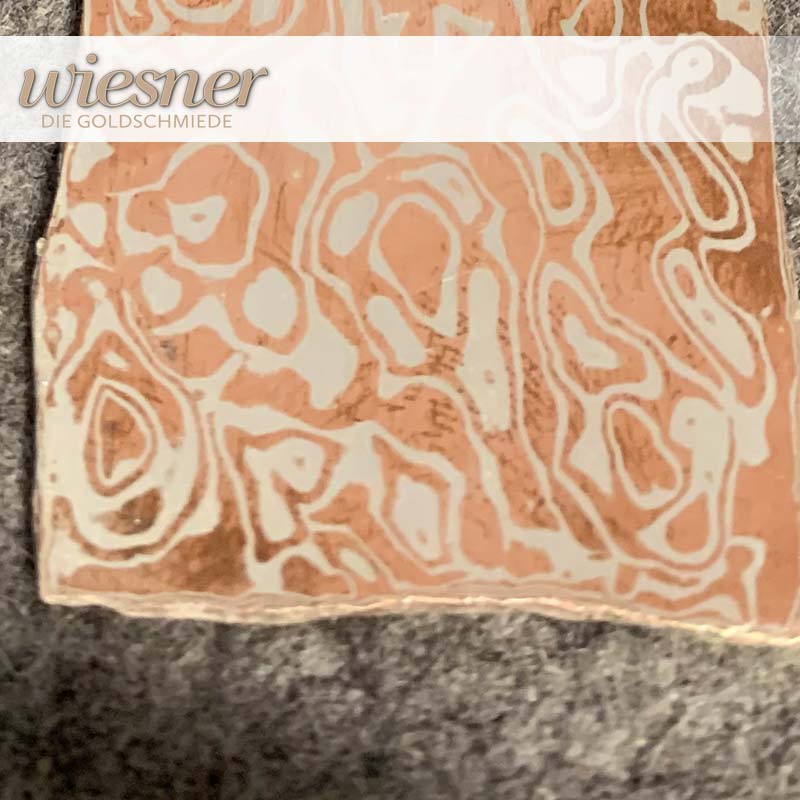
Shakudo can therefore be a material used in a Mokume Gane piece. Mokume Gane itself, on the other hand, refers to the technique or the resulting patterned layered material.
This distinction is important: Not every Mokume Gane ring contains Shakudo—and an object made of Shakudo is not automatically Mokume Gane.
Our Mokume-Gane rings do not contain Shakudo
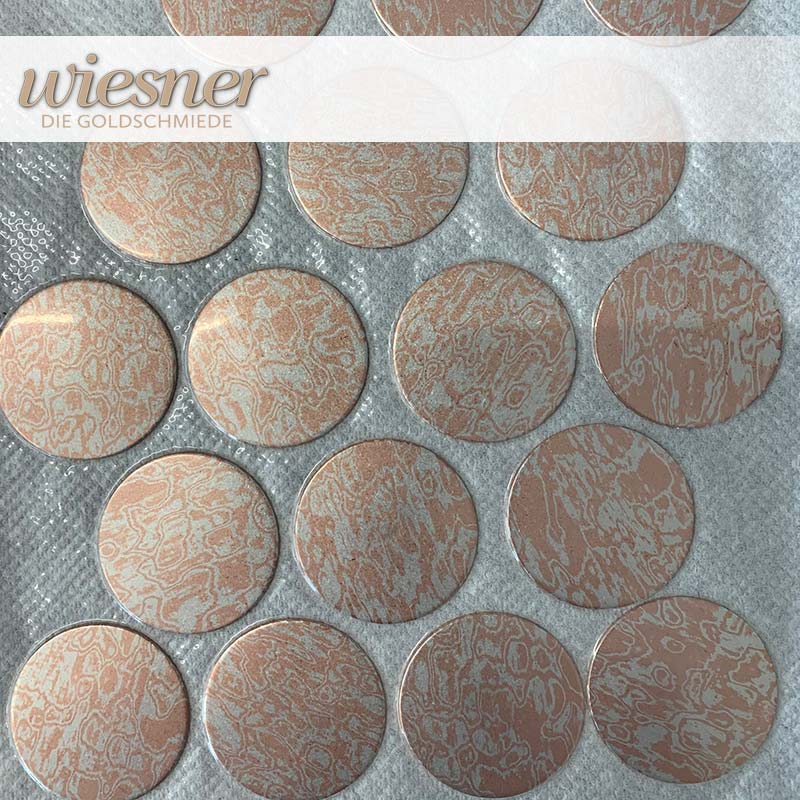
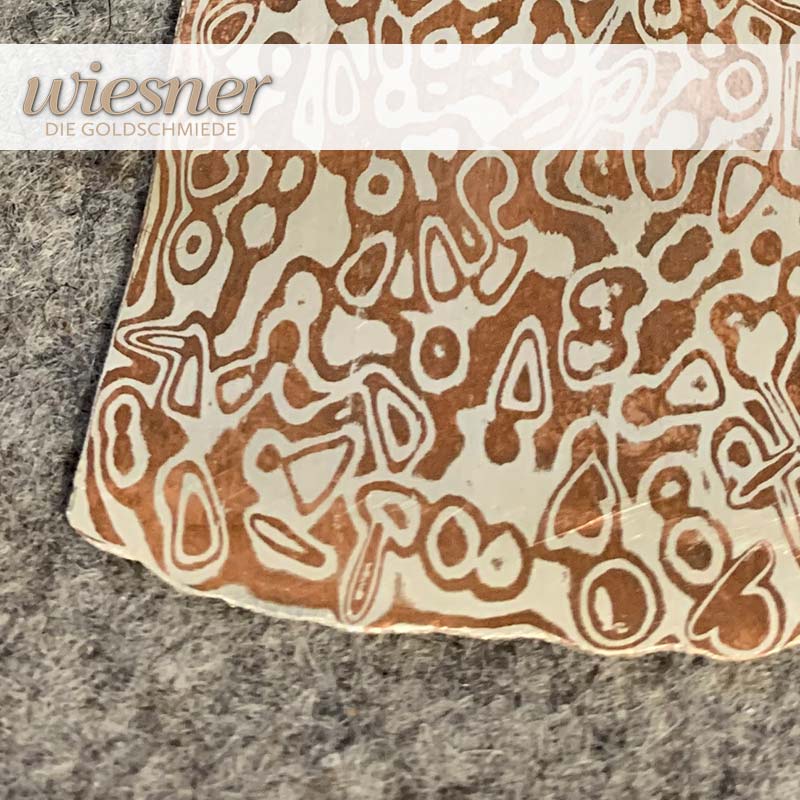
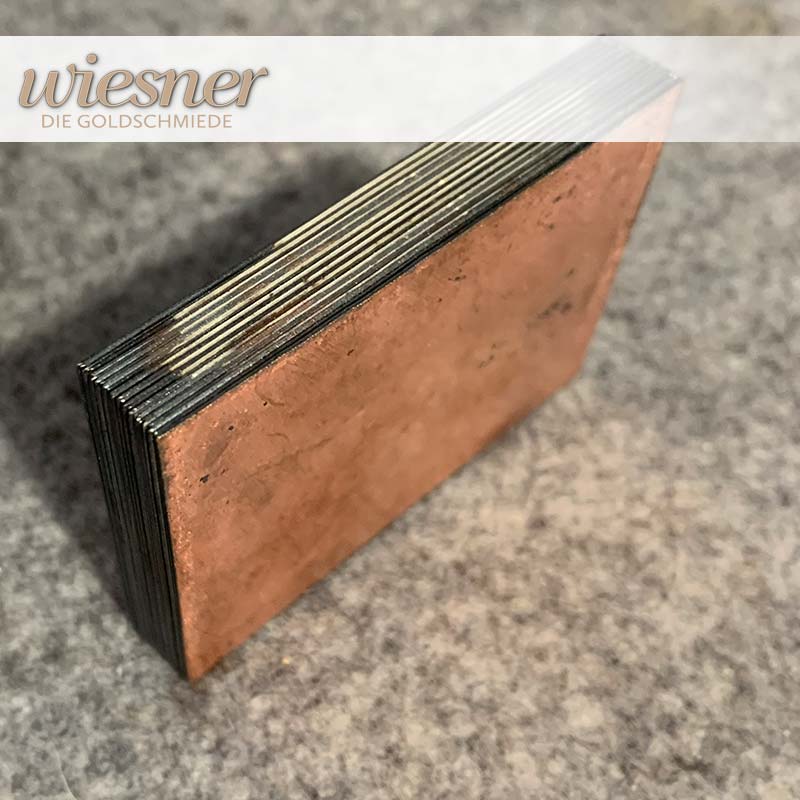
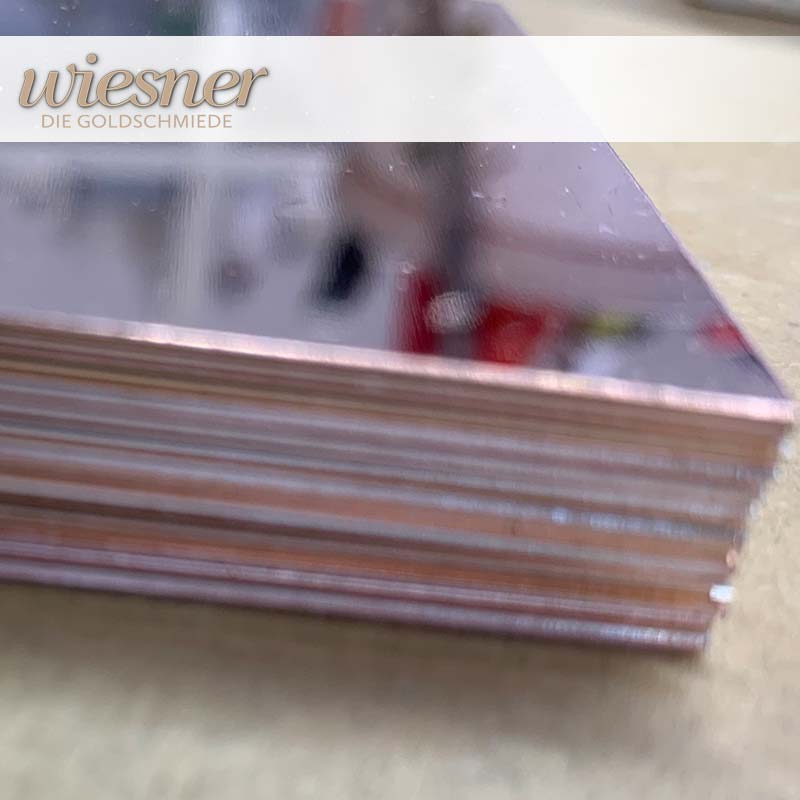
In our goldsmith’s workshop, we use different combinations of precious metals for our Mokume-Gane wedding bands. Depending on the model, we combine, for example, palladium, silver, yellow gold, rose gold, or platinum to create a solid layered material.
The following rings therefore do not contain Shakudo. However, they illustrate very well why different metal colors are so interesting for Mokume-Gane.
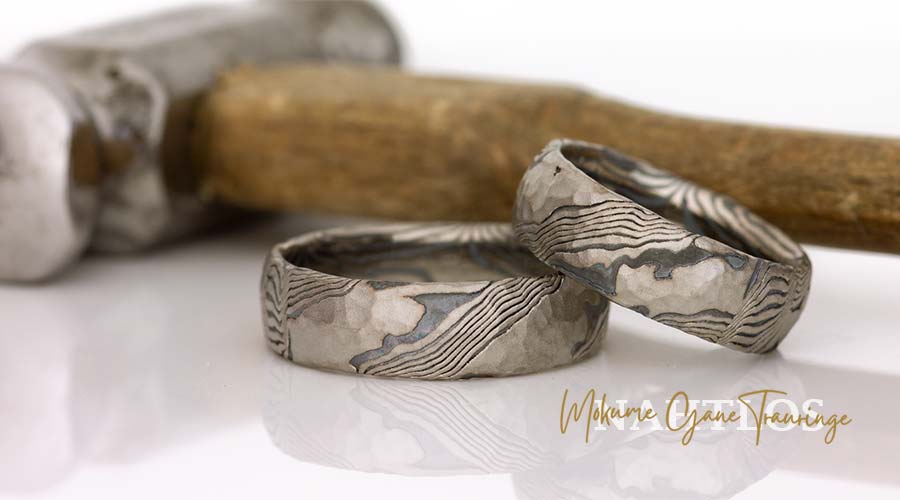
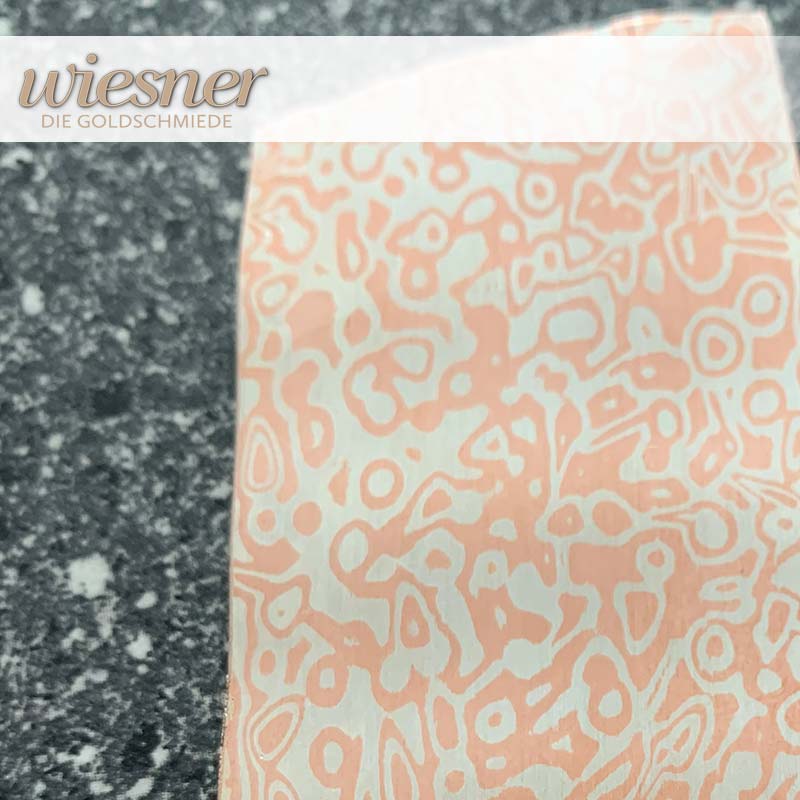
Iroko: These Mokume Gane rings are made of palladium and silver. The dark contrast here is not created by Shakudo. The characteristic wood grain becomes visible through the finishing of the various precious metal layers.
Why Shakudo Is Interesting for Mokume Gane
From a design perspective, it’s easy to see why Shakudo was of interest in traditional multicolored metalwork. A very dark metal surface creates a strong contrast with gold, silver, or light-colored copper alloys.
It is precisely this principle—making different metal colors visible side by side—that also plays an important role in Mokume Gane.
Our current approach applies this concept to other materials. We select precious metals and alloys so that their colors harmonize with one another while clearly revealing the desired grain pattern.
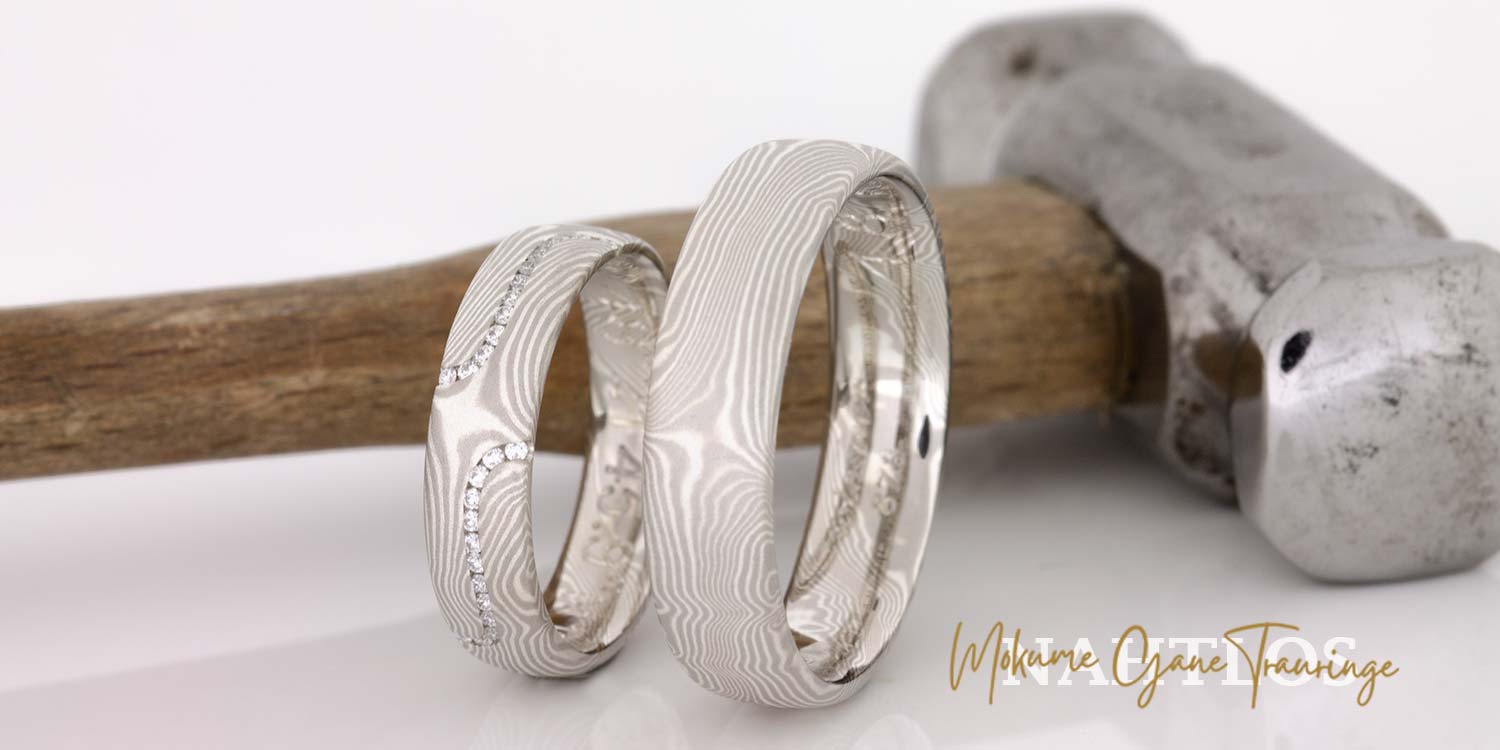
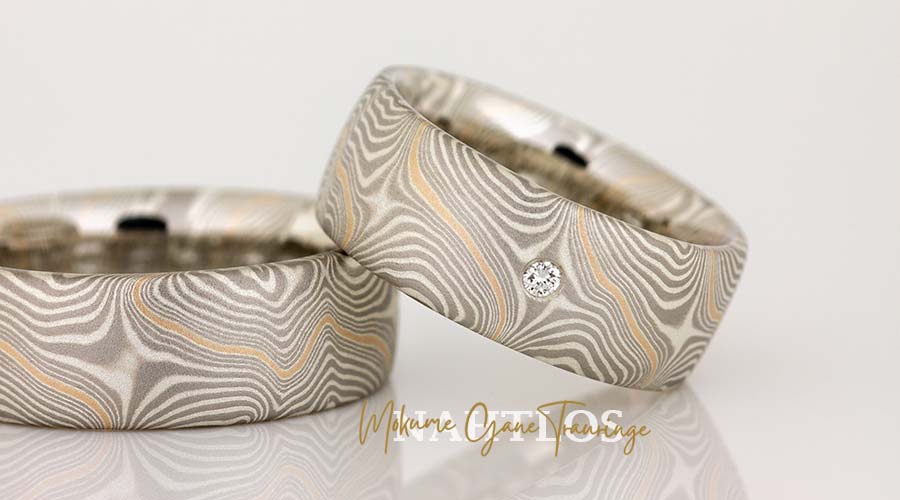
Faro also does not require shakudo. Here, palladium and silver form a light, finely detailed Mokume Gane grain. Diamonds can add additional accents.
Shakudo and Shibuichi—Two Different Japanese Alloys
In the context of traditional Japanese metalwork, the term “Shibuichi” is frequently encountered alongside “Shakudo.”
These two materials should not be confused with one another. While shakudo is primarily based on copper and gold, shibuichi is a copper-silver alloy.
Both materials were prized for the hues that could be achieved through surface treatment and were used alongside gold, silver, and other metals in elaborate Japanese metalwork.
Can Shakudo Be Used for Wedding Rings?
Technically, shakudo can be crafted into jewelry and combined with other metals. However, this does not automatically mean it is the best choice of material for wedding rings worn day in and day out.
The characteristic appearance of shakudo relies heavily on its patinated surface. On a ring, this surface is constantly exposed to mechanical stress. Friction, scratches, and everyday wear and tear can alter the patina.
Added to this is the very high copper content. For our own Mokume-Gane wedding rings, we therefore prefer the combinations of precious metals that we have tested ourselves.
Shakudo at a Glance
| Material | Traditional Japanese copper-gold alloy |
| Main Component | Copper |
| Other major component | Gold in a relatively small amount |
| Typical color effect | After patination: dark brown, violet-black to nearly black |
| Historical use | Japanese metalwork, particularly ornate sword fittings and art objects |
| Is Shakudo Mokume Gane? | No. Shakudo is an alloy; Mokume Gane is a metalworking technique or the layered material produced by it. |
| Is Shakudo available at Wiesner Mokume Gane? | No. The Mokume Gane wedding rings we showcase are crafted from other combinations of precious metals. |
Frequently Asked Questions About Shakudo
What is Shakudo made of?
At its core, Shakudo is a copper-rich alloy with a small amount of gold. Historical recipes may vary in their exact composition.
Why is Shakudo black?
The dark color is not caused solely by the alloy, nor is it the result of black lacquer. It is created through a deliberate patina treatment of the metal surface.
Is Shakudo the same as Mokume Gane?
No. Shakudo refers to a material. Mokume Gane refers to a traditional Japanese technique in which different layers of metal are bonded together and worked in such a way as to create a distinctive grain pattern.
Can shakudo be part of mokume gane?
Yes. Shakudo can be combined with other metals in multicolored metalwork and also in Mokume Gane compositions. However, it is by no means an essential component of Mokume Gane.
Does Wiesner use Shakudo for Mokume Gane rings?
No. Depending on the model, we craft our Mokume-Gane wedding rings from combinations of yellow gold, rose gold, palladium, silver, or platinum. The Mokume-Gane layered material is built up, welded, and then forged and patterned in our own goldsmith’s workshop.
Our Conclusion from the Goldsmith’s Workshop
Shakudo is particularly fascinating because a comparatively small proportion of gold can significantly influence the appearance of a copper-rich alloy after patination. The nearly black surface allowed Japanese metal artists to create strong contrasts with gold, silver, and other alloys.
Shakudo is therefore historically and materially significant for understanding Mokume Gane. However, it should not be confused with Mokume Gane itself.
In our own goldsmith’s workshop, we use different combinations of precious metals for our Mokume Gane rings. These combinations also produce striking color contrasts and unique grain patterns—though they are made from materials we have been using to craft our wedding rings for many years.


