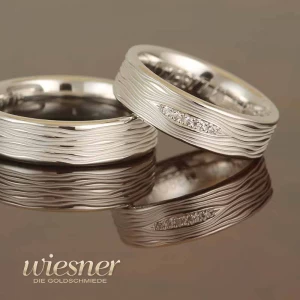
NAHTLOS geschmiedet
INDIVIDELL auf Sie zugeschnitten
ABSOLUTE Unikate
post@wiesner-trauringe.de
Close filters
Filter by:

View all rings from Markus Wiesner

Welcome to Markus' Mokume Gane Rings Gallery 

Mokume gane advice by telephone

I will be happy to advise you by phone: +49 (0) 7062 22991

regarding:

- your very own unique piece
- the possibilities
- the ring width service
- the reconditioning service
- all open questions

Precious Metals

Precious metals form the basis of high-quality jewelry. Their durability, their special material properties and their good workability have made them the preferred materials in goldsmithing for centuries. This guide provides you with an in-depth overview of the most important precious metals, their properties and their use in the jewelry workshop. You will also find additional specialist articles that go into more detail on individual topics.

Contents: What are precious metals? | What precious metals are there? | Precious metals in comparison | Alloys & finenesses | Everyday life & care | Value & Price | Sustainability | FAQ


What are precious metals?

Precious metals are metals that are particularly chemically stable and only react with oxygen or moisture to a small extent. They do not rust and retain their substance for a very long time. These properties are crucial for pieces of jewelry that are intended to be worn permanently.

However, in practical craftsmanship, precious metals are not automatically synonymous with high hardness. Many precious metals are relatively soft and are therefore specifically alloyed to make them more resistant and easier to work with.

What precious metals are there?

The following precious metals are mainly used in jewelry production:

  • Gold (Au) - versatile, in different colors depending on the alloy
  • Silver (Ag) - light-colored precious metal with a classic character
  • Platinum (Pt) - particularly dense, durable and resistant
  • Palladium (Pd) - light-colored precious metal from the platinum group

There are also other metals from the so-called platinum group such as rhodium, iridium and ruthenium. These are not usually used as the main material in jewelry, but play an important role in alloys or surface finishes.


Precious metals in comparison - differences from a workshop perspective

When selecting a precious metal, it is not only the appearance and price that are decisive. From a craftsman's point of view, density, malleability, scratch sensitivity and everyday wearability also play a major role.

Gold

Gold is almost always alloyed, as fine gold would be too soft for most pieces of jewelry. Depending on the composition, different colors and properties are created, for example in yellow gold, white gold or rose gold.

Silver

Silver is characterized by its light color. Sterling silver (925) is usually used in the workshop. Silver can tarnish, which is a natural surface reaction and is not a quality defect.

Platinum

Platinum is extremely durable and is preferred for jewelry that will be worn daily for many years. Signs of wear usually appear as a fine patina, not as a loss of material.

Palladium

Palladium is a light-colored precious metal from the platinum group and is sometimes used as an alternative to white gold. Its suitability depends heavily on the specific alloy and the planned piece of jewelry.


Alloys & fineness - what do 333, 585, 750 or 950 mean?

The fineness indicates how much pure precious metal is contained in an alloy. It is usually stamped as a number in the piece of jewelry:

  • Gold 333 - 33.3 % gold content
  • Gold 585 - 58.5 % gold content
  • Gold 750 - 75.0 % gold content
  • Platinum 950 - 95.0 % platinum content
  • Silver 925 - 92.5 % silver content

The other components influence hardness, color and workability and are a decisive factor for the quality of a piece of jewelry.


Precious metals in everyday life - signs of wear & care

Traces of wear cannot be completely avoided with regularly worn jewelry. The decisive factor is how visible these marks are and how the surface changes over time.

  • Polished surfaces show scratches more quickly
  • Matt surfaces appear more even
  • Textured surfaces conceal signs of wear

For care, lukewarm water, a mild detergent and a soft cloth are usually sufficient. Jewelry should be protected from mechanical stress.


Value & price of precious metals

The prices of precious metals are influenced by market demand, production volumes and economic factors. However, it is not only the material price that is relevant for jewelry, but also the craftsmanship, design and quality of the alloy.


Sustainability & recycling of precious metals

Precious metals are ideal for recycling. Reprocessed material can be reused without any loss of quality and represents a resource-saving alternative to new extraction.


Further specialist articles on the subject of precious metals


FAQ - Frequently asked questions about precious metals

Which precious metal is best suited for everyday jewelry?

The decisive factors are alloy, processing and wearing behavior. Platinum and high-quality gold alloys are particularly suitable for everyday wear.

Is tarnishing in silver a quality defect?

No. Tarnishing is a natural surface reaction and can be easily remedied through care and cleaning.

What does the fineness say about the quality?

The fineness indicates the proportion of precious metal, but says nothing about the craftsmanship or durability of a piece of jewelry.

Precious metals form the basis of high-quality jewelry. Their durability, their special material properties and their good workability have made them the preferred materials in goldsmithing for... read more »
Close window
Precious Metals

Precious metals form the basis of high-quality jewelry. Their durability, their special material properties and their good workability have made them the preferred materials in goldsmithing for centuries. This guide provides you with an in-depth overview of the most important precious metals, their properties and their use in the jewelry workshop. You will also find additional specialist articles that go into more detail on individual topics.

Contents: What are precious metals? | What precious metals are there? | Precious metals in comparison | Alloys & finenesses | Everyday life & care | Value & Price | Sustainability | FAQ


What are precious metals?

Precious metals are metals that are particularly chemically stable and only react with oxygen or moisture to a small extent. They do not rust and retain their substance for a very long time. These properties are crucial for pieces of jewelry that are intended to be worn permanently.

However, in practical craftsmanship, precious metals are not automatically synonymous with high hardness. Many precious metals are relatively soft and are therefore specifically alloyed to make them more resistant and easier to work with.

What precious metals are there?

The following precious metals are mainly used in jewelry production:

  • Gold (Au) - versatile, in different colors depending on the alloy
  • Silver (Ag) - light-colored precious metal with a classic character
  • Platinum (Pt) - particularly dense, durable and resistant
  • Palladium (Pd) - light-colored precious metal from the platinum group

There are also other metals from the so-called platinum group such as rhodium, iridium and ruthenium. These are not usually used as the main material in jewelry, but play an important role in alloys or surface finishes.


Precious metals in comparison - differences from a workshop perspective

When selecting a precious metal, it is not only the appearance and price that are decisive. From a craftsman's point of view, density, malleability, scratch sensitivity and everyday wearability also play a major role.

Gold

Gold is almost always alloyed, as fine gold would be too soft for most pieces of jewelry. Depending on the composition, different colors and properties are created, for example in yellow gold, white gold or rose gold.

Silver

Silver is characterized by its light color. Sterling silver (925) is usually used in the workshop. Silver can tarnish, which is a natural surface reaction and is not a quality defect.

Platinum

Platinum is extremely durable and is preferred for jewelry that will be worn daily for many years. Signs of wear usually appear as a fine patina, not as a loss of material.

Palladium

Palladium is a light-colored precious metal from the platinum group and is sometimes used as an alternative to white gold. Its suitability depends heavily on the specific alloy and the planned piece of jewelry.


Alloys & fineness - what do 333, 585, 750 or 950 mean?

The fineness indicates how much pure precious metal is contained in an alloy. It is usually stamped as a number in the piece of jewelry:

  • Gold 333 - 33.3 % gold content
  • Gold 585 - 58.5 % gold content
  • Gold 750 - 75.0 % gold content
  • Platinum 950 - 95.0 % platinum content
  • Silver 925 - 92.5 % silver content

The other components influence hardness, color and workability and are a decisive factor for the quality of a piece of jewelry.


Precious metals in everyday life - signs of wear & care

Traces of wear cannot be completely avoided with regularly worn jewelry. The decisive factor is how visible these marks are and how the surface changes over time.

  • Polished surfaces show scratches more quickly
  • Matt surfaces appear more even
  • Textured surfaces conceal signs of wear

For care, lukewarm water, a mild detergent and a soft cloth are usually sufficient. Jewelry should be protected from mechanical stress.


Value & price of precious metals

The prices of precious metals are influenced by market demand, production volumes and economic factors. However, it is not only the material price that is relevant for jewelry, but also the craftsmanship, design and quality of the alloy.


Sustainability & recycling of precious metals

Precious metals are ideal for recycling. Reprocessed material can be reused without any loss of quality and represents a resource-saving alternative to new extraction.


Further specialist articles on the subject of precious metals


FAQ - Frequently asked questions about precious metals

Which precious metal is best suited for everyday jewelry?

The decisive factors are alloy, processing and wearing behavior. Platinum and high-quality gold alloys are particularly suitable for everyday wear.

Is tarnishing in silver a quality defect?

No. Tarnishing is a natural surface reaction and can be easily remedied through care and cleaning.

What does the fineness say about the quality?

The fineness indicates the proportion of precious metal, but says nothing about the craftsmanship or durability of a piece of jewelry.
Choosing the right precious metal is one of the most important decisions when making or selecting a piece of jewelry. Gold, platinum and palladium differ not only in price, but also in color...
Numbers such as 585, 750 or 950 can be found on many pieces of jewelry. These figures are referred to as fineness and provide information on how much pure precious metal is contained in an alloy...
The tarnishing of jewelry is a common concern. This is a natural surface reaction that varies depending on the precious metal...

Rutenium

Ruthenium is the precious metal for connoisseurs: discreet, resistant and with a unique dark appearance. Find out how it finds its place in modern jewelry design and high-tech applications.

Osmium

Osmium - the rarest precious metal in the world - fascinates with its unique crystalline structure and extreme density. Find out why osmium jewelry is not only a visual highlight, but also a promising investment.

White gold

Discover the history and significance of white gold, an almost colorless gold alloy that was developed in Pforzheim in 1912/13 as a cost-effective substitute for platinum. White gold is produced by adding metals such as palladium, nickel or silver and is characterized by its tarnish-resistant, elegant appearance. Ideal for jewelry pieces that show off colorless diamonds, white gold is one of the most popular choices in the jewelry industry today.

Platinum

Learn about the fascinating history of platinum, a rare and corrosion-resistant precious metal that has been known since 3000 BC. Today indispensable in the jewelry industry, platinum impresses with its hardness, density and elegance. Discover why platinum is more expensive than gold despite its lower price per ounce and why it is so popular with bridal couples and jewelry lovers.

Palladium

Learn about the fascinating history of palladium, which was discovered by William Hyde Wollaston in 1803. Palladium, known for its corrosion resistance and high strength, is prized in the jewelry industry for wedding bands, engagement rings and mokume gane technology. Discover the unique properties of this precious metal, its extraction from nickel and copper ores and its role as a hypoallergenic material in high-quality jewelry alloys such as white gold.

Green gold

Green gold is a special gold alloy with a greenish shimmer that is created by a special atomic ratio of gold to silver. This alloy is occasionally used in jewelry making, especially for elaborate designs such as mokume gane wedding rings.

Gold / fine gold

Learn all about fine gold, the pure gold used in jewelry making. Discover the history, alloys and versatile applications of this fascinating precious metal. From classic wedding rings and luxury jewelry to the mokume gane technique, fine gold remains a timeless symbol of beauty and durability. Perfect for jewelry lovers and design enthusiasts alike.

Red gold

Discover the fascinating world of red gold, a unique gold alloy made from fine gold, copper and silver. Find out more about its composition, the variety of shades and its many uses in jewelry making. Explore the regional popularity and historical names of this reddish gold alloy. You will also learn valuable tips on the care and maintenance of your red gold jewelry. Be inspired by the timeless elegance and individual beauty that red gold has to offer. Perfect for jewelry lovers and design enthusiasts alike.

Iridium

Learn about the fascinating history and importance of iridium, one of the hardest and most corrosion-resistant metals discovered in 1803. Iridium is used in the jewelry industry for particularly hard-wearing pieces of jewelry such as wedding rings. Discover why iridium alloys are prized for their exceptional hardness, durability and elegant appearance.

Yellow gold

Discover the classic elegance of yellow gold, a bright yellow gold alloy made from fine gold, silver and copper. Find out more about its composition, color variations and versatile applications in jewelry making. Yellow gold remains the most popular gold color worldwide and symbolizes luxury, tradition and timeless beauty. Perfect for jewelry lovers and design enthusiasts alike.

Shakudo Mokume

Discover the world of shakudo, a fascinating Japanese alloy of copper and gold that has inspired artists and craftsmen for centuries. This article introduces you to the rich history and diverse applications of shakudo, from ornate jewelry to samurai swords to modern design objects. Learn more about the unique aesthetics and profound cultural significance of this traditional metal art, which is still appreciated in Japan and around the world today. Immerse yourself in the world of shakudo, where tradition meets innovation, and discover how this ancient alloy enriches modern creations.

Shibuichi as a mokume gane alloy

Shibuichi - Japanese alloy from the 7th century

Mokume Gane - Technique of the masters

Mokume Gane is a traditional Japanese forging technique dating back to the 17th century, in which different metals are fused in layers to create unique, wood grain-like patterns. This technique is often used in jewelry such as wedding rings. The combination of metals such as white gold, yellow gold, rose gold, platinum and palladium creates robust and aesthetically pleasing unique pieces. Mokume Gane reflects the Japanese aesthetic that finds beauty in simplicity and imperfection and is now popular with artists and metalsmiths worldwide.
The fascinating world of pearls: discover the different types of cultured pearls such as Akoya, South Sea, Keshi and freshwater pearls. Learn more about their origin, creation and unique characteristics. Immerse yourself in the natural beauty and elegance of these precious jewels.

Rhodium

How is rhodium extracted - what properties - in the jewelry industry - as a catalyst - as a coating - as an investment - sustainable extraction - history of rhodium

Silver

Learn more about the versatility and history of silver, a shiny precious metal that plays a central role in minting coins, jewelry making and many other applications. Discover the different silver alloys, how to care for silver jewelry and the fascinating mokume gane technique. Perfect for jewelry lovers and history buffs alike.

Wissenswertes über Edelmetalle im Schmuckdesign

Gold, Platin, Silber oder Palladium – die Wahl des Edelmetalls prägt den Charakter jedes Schmuckstücks. In dieser Rubrik stellen wir Ihnen die wichtigsten Edelmetalle im Detail vor: ihre Eigenschaften, Farben, Legierungen und Vorzüge. Sie erfahren, welche Metalle sich für Verlobungsringe, Eheringe oder besondere Unikate eignen – und wie sie verarbeitet werden. Auch Besonderheiten wie Rhodium, Iridium oder Grüngold kommen zur Sprache. Für alle, die sich bewusst und informiert für ihr Lieblingsmetall entscheiden wollen.

NAHTLOS geschmiedet
INDIVIDELL auf Sie zugeschnitten
ABSOLUTE Unikate
post@wiesner-trauringe.de